
Home//Industrial Sourcing
04Industrial Sourcing

Technical Sourcing & Industrial Supply

Industrial component and equipment sourcing by brand, model, part number, datasheet, or technical specification, covering RFQ management, option review, purchasing documents, freight, and inbound verification.

Part-number and manufacturer-datasheet based sourcingRFQ for hard-to-source and specialist industrial componentsTechnical comparison of alternatives when the original model is unavailable
Discuss a project
Scope

What this activity actually covers

The scope is written around the actual workflow rather than unsupported capacity or accuracy claims.

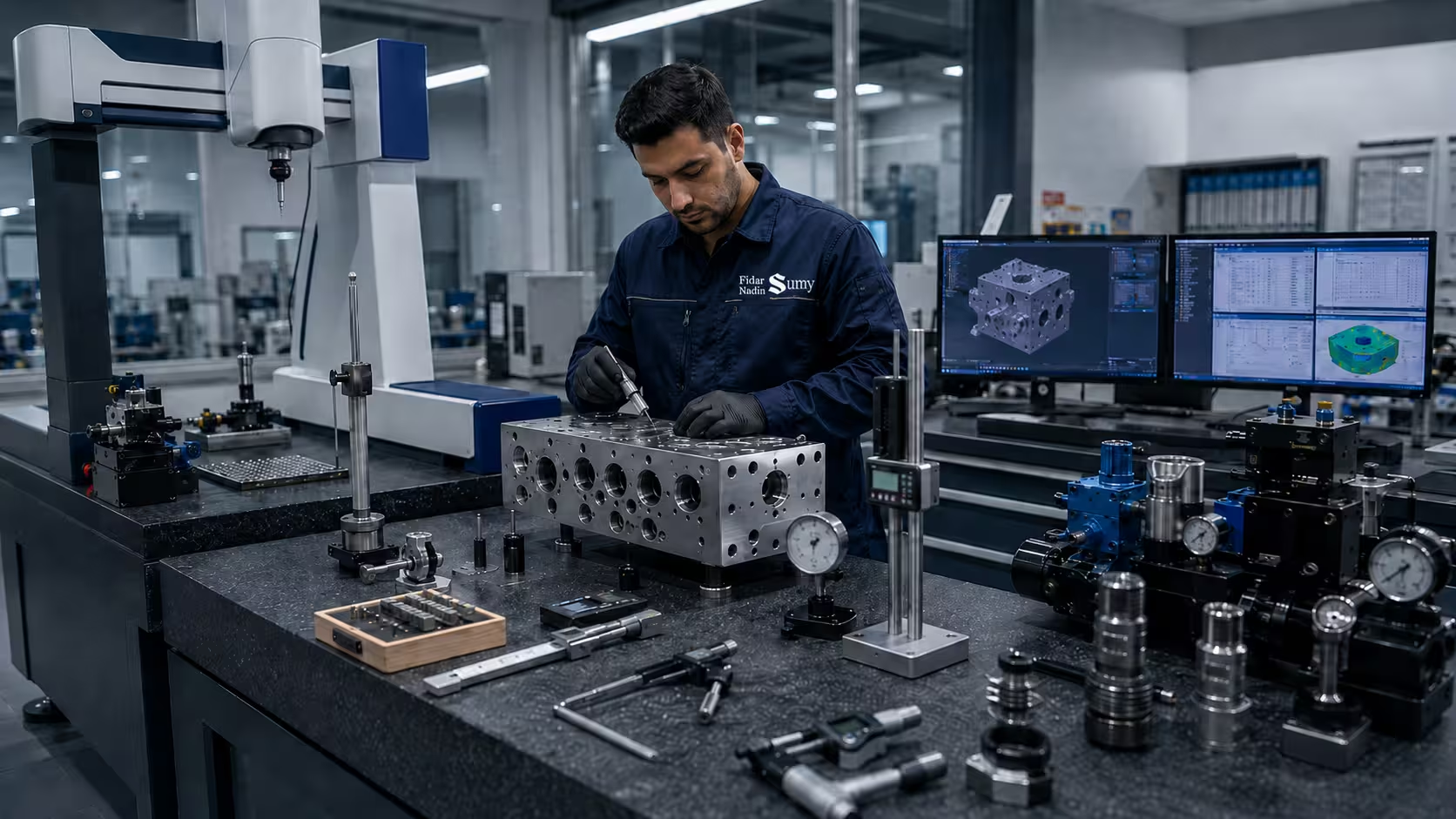
In industrial sourcing, the most important step before quotation is exact item identification. Part number, product series, voltage, size, connection type, pressure range, and other key parameters should be checked against the installed equipment and manufacturer data to reduce the risk of ordering a similar but unsuitable variant.

After identification, offers are compared on technical compliance, stock, lead time, warranty terms, and available documentation. If the original model is unavailable, alternatives are proposed only after comparing key parameters, with final selection subject to customer technical approval.

Freight and packaging are selected according to origin, weight, volume, product sensitivity, and urgency. On receipt, model, quantity, labels, packaging condition, and accompanying documents are checked against the approved order. Documents such as CoC, MTC, or test reports are promised only when provided by the manufacturer or vendor.

Core capabilities
  • Part-number and manufacturer-datasheet based sourcing
  • RFQ for hard-to-source and specialist industrial components
  • Technical comparison of alternatives when the original model is unavailable
  • Purchase and air, sea, or road freight coordination according to shipment needs
  • Inbound verification of model, labels, quantity, and available documents
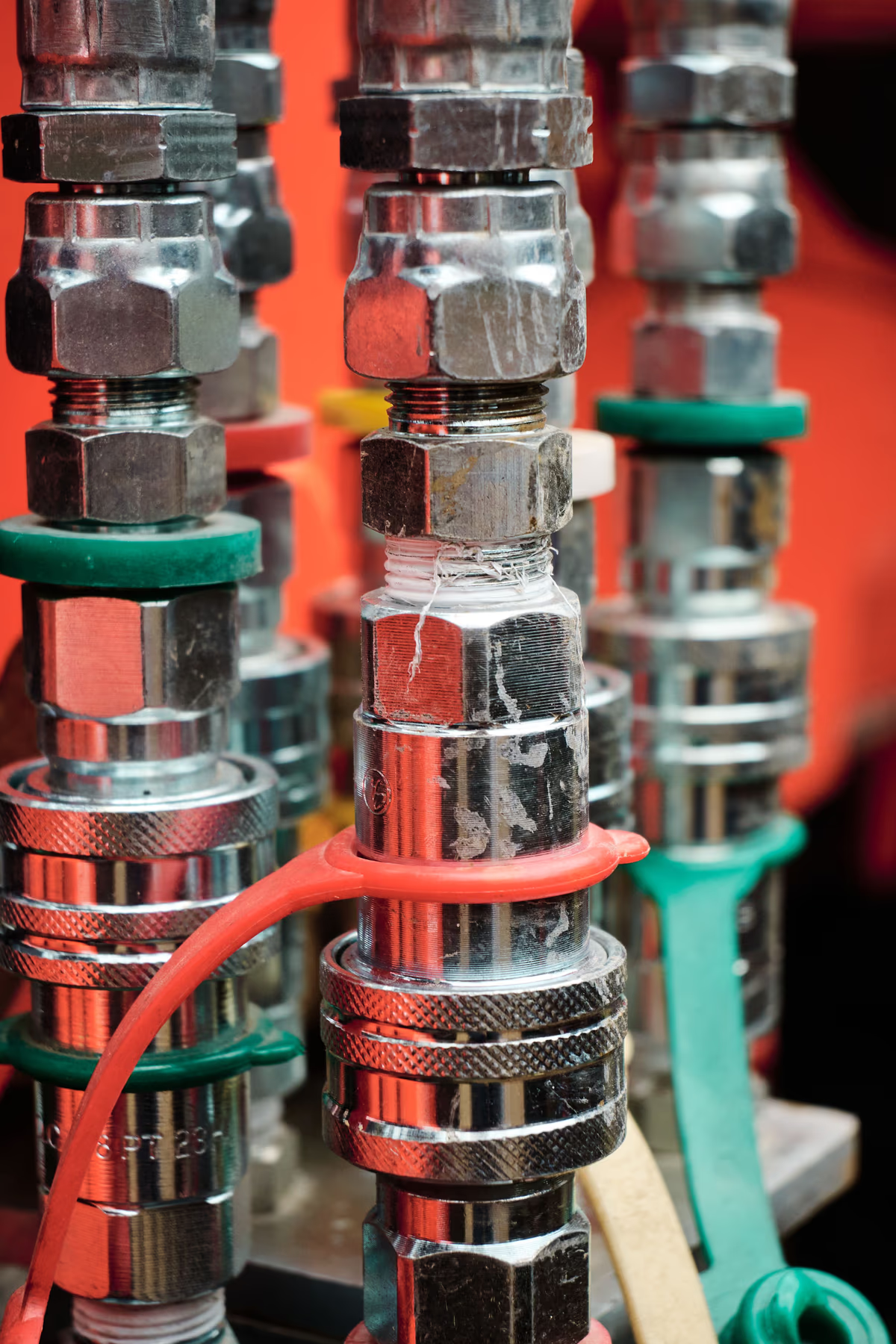
  • Sourcing hydraulic, pneumatic, and industrial components beyond a single brand
Deliverables
  • Goods matching the approved order and specification
  • Invoice, packing list, and applicable transport documents
  • CoC, MTC, or manufacturer documents when supplied by the OEM or vendor
  • Technical comparison report for alternatives when required
  • Inbound verification and discrepancy record where goods differ from the order
Workflow

From request to delivery

Project details vary, but the control and delivery logic generally follows this sequence.

01
Exact item identification

Review brand, model, part number, nameplate photo, datasheet, and operating conditions.

Technical ambiguities are resolved before RFQ
02
RFQ & evaluation

Obtain offers and review technical compliance, stock, lead time, warranty terms, and available documents.

Offer is checked against the requested specification
03
Approval & purchase

Final offer, purchase terms, and any proposed alternative are consolidated for customer technical approval.

Approved model and quantity become the purchasing basis
04
Logistics & documents

Coordinate packing and freight according to origin, weight, size, and urgency.

Purchase and transport documents are checked before delivery
05
Inbound check & delivery

Verify model, quantity, labels, packaging, and available documents against the approved order.

Any discrepancy is recorded and followed up before final delivery
Typical applications
  • Hydraulic and pneumatic components
  • Filters, pumps, valves, accumulators, and accessories
  • Spare parts for machinery and production lines
  • Specialist equipment with limited local availability
  • Components requiring technical equivalence or replacement review

What to send for a faster technical review

The clearer the technical input at the start, the less back-and-forth is needed during sourcing, manufacturing, or inspection.

  • 01Exact brand, model, and part number where available
  • 02Nameplate/label photo, existing part photo, or datasheet
  • 03Required quantity and delivery urgency
  • 04Operating conditions or key parameters when an alternative is requested
Send technical request
Website database

Products and brands available for review

This section is populated directly from the website product database and represents examples of the sourcing scope.

No matching products found.

Start the project with the right technical information.

Send a drawing, part photo, part number, datasheet, or problem description so the requirement can be technically reviewed before quotation or manufacturing.

Send request
Hydraulic systems and fluid power

Technical supply of hydraulic pumps, valves and industrial equipment

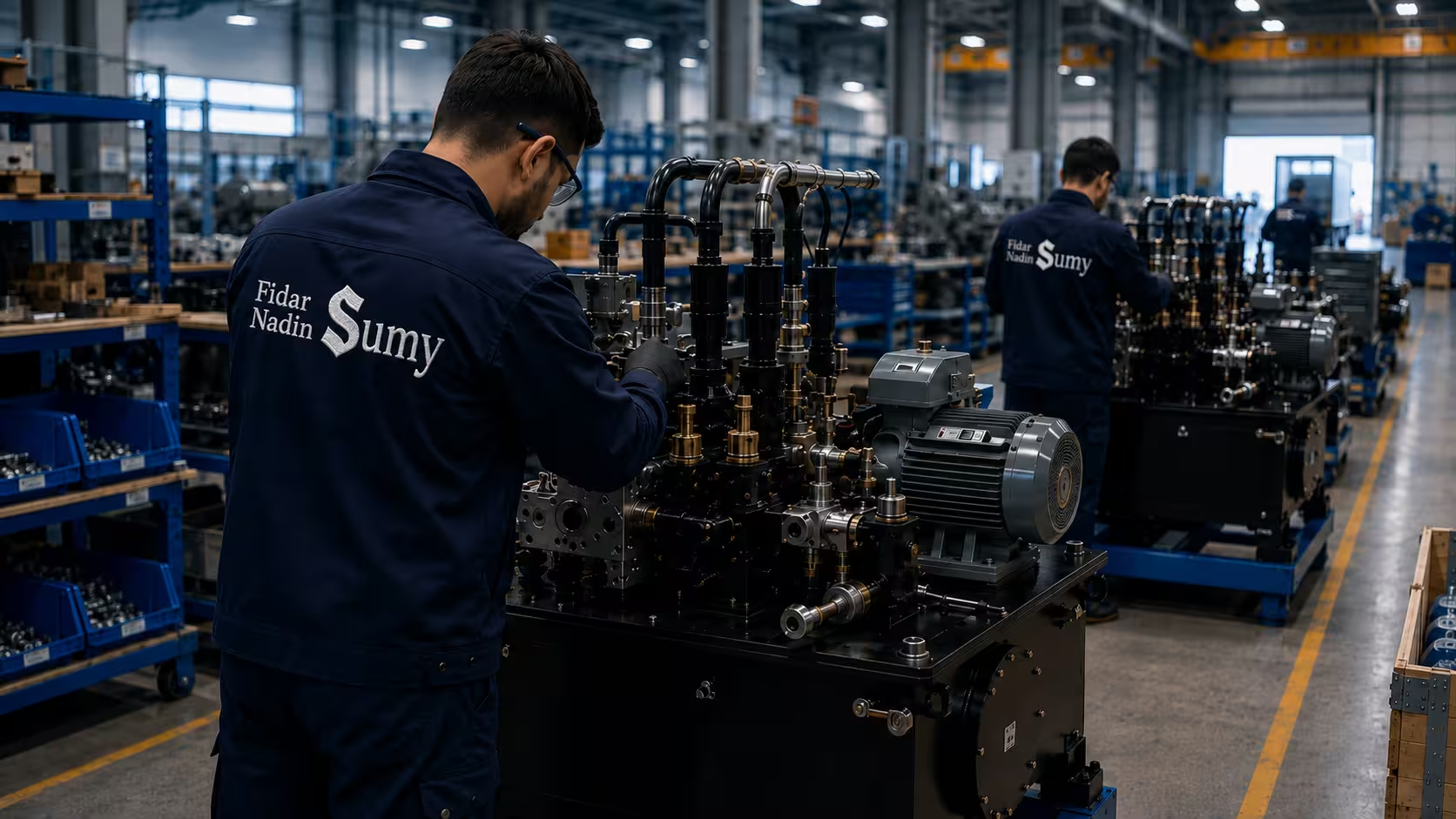
Reliable hydraulic equipment sourcing starts with the circuit, pressure, flow, fluid, temperature, duty cycle and mounting restrictions, not with a similar product name. Fidar Industrial Group reviews hydraulic pumps, hydraulic valves, filters, motors, cylinders, accumulators, coolers, manifolds and hydraulic power-unit components against real application data.

For obsolete or hard-to-source products, rotation, shaft and flange, port arrangement, valve logic, pressure range, flow capacity, filtration rating and seal compatibility are compared. This reduces the risk of pressure loss, overheating, cavitation, leakage or unstable machine operation after replacement.

Technical scope and related equipment

  • Gear, vane and piston hydraulic pumps and pump-control assemblies
  • Directional, pressure and flow-control valves and solenoid hydraulic valves
  • Pressure and return filters, elements, coolers and oil-monitoring devices
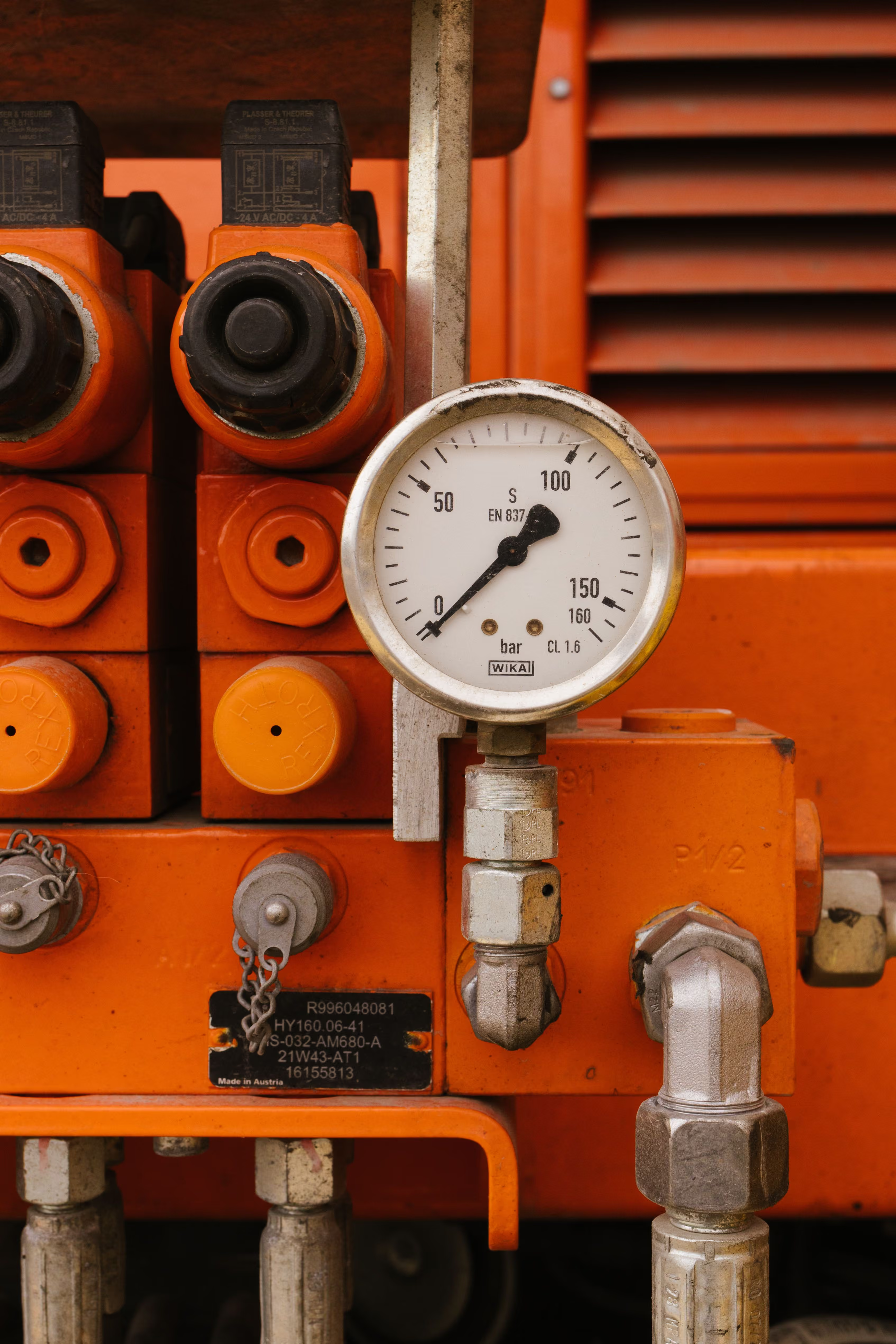
  • Hydraulic motors, cylinders, accumulators, gauges and pressure switches
  • Individual parts, bills of material, repair kits and power-unit components

Engineering and selection considerations

  • Hydraulic pump selection requires displacement, continuous and peak pressure, input speed, rotation, shaft, flange, ports and control type.
  • Hydraulic valve selection requires mounting pattern, nominal size, flow, pressure, coil voltage, operating logic, internal leakage and dynamic response.
  • When no direct replacement exists, adapter plates, redesigned manifolds, controlled piping changes or custom interface parts can be evaluated.

Information required to begin

  • Clear nameplate photographs and the complete product code
  • Manufacturer, quantity, working pressure, flow and fluid
  • Machine type, installation point and reason for replacement
  • For power units: schematic, BOM, motor data and reservoir capacity

Related technical subjects

Hydraulic pump, hydraulic valve, pressure-control valve, directional valve, hydraulic filter, hydraulic motor, hydraulic cylinder, hydraulic power unit and manifold are included in this service.