
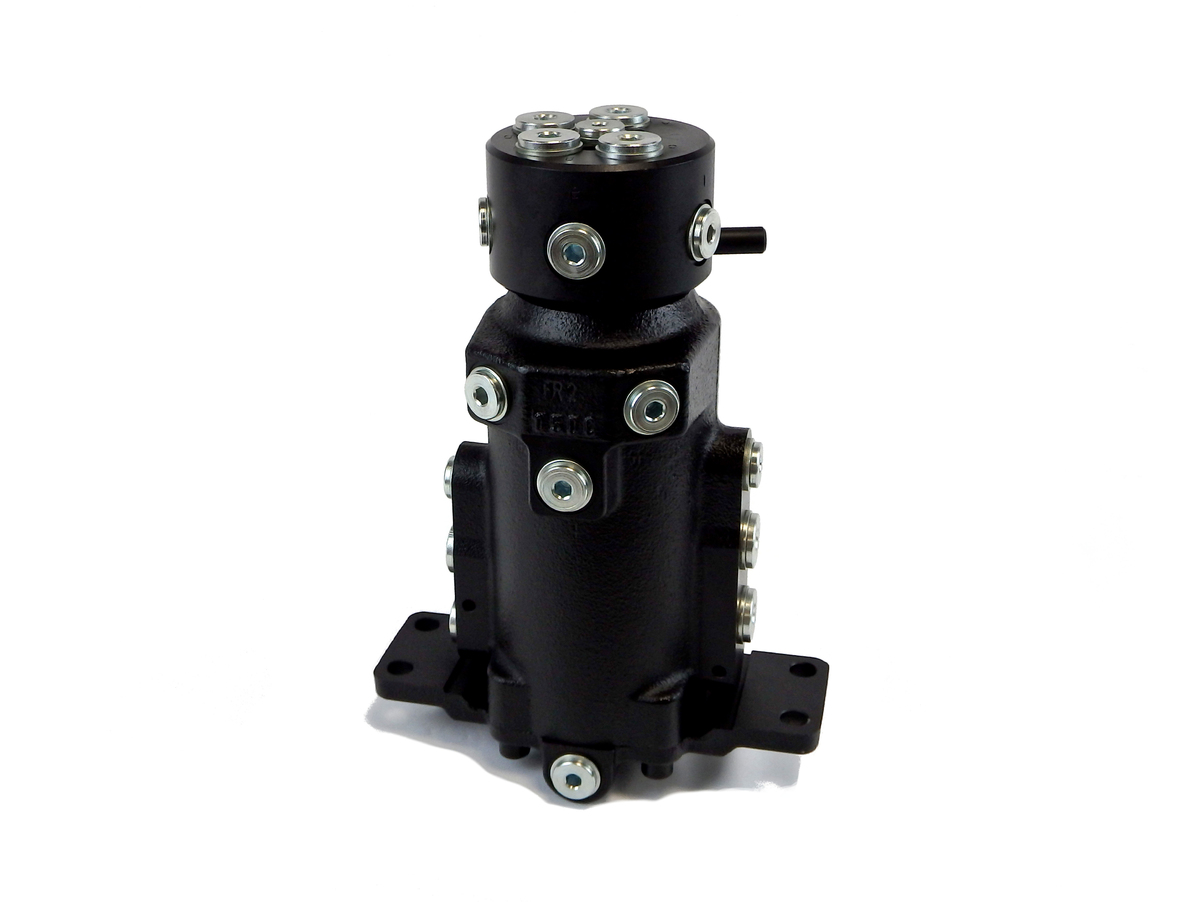
Swivel joint
Swivel joint is part of the Roquet other hydraulic products range. This SUMY page combines the product identity, recorded technical data and the practical checks required for selection, replacement and quotation.
Technical details
Product overview
Swivel joint belongs to the Roquet other hydraulic products family. The page is arranged as a practical technical reference: first the information recorded for this exact product, then the engineering points that should be checked against the real hydraulic circuit, installation and replacement requirements.
This family groups additional Roquet hydraulic components and systems such as solenoid valves, changeover valves, compact power units and application-specific valves.
Because the functions are diverse, the exact product title and recorded data should be used first; selection checks then depend on the component type and its role in the hydraulic system.
Recorded technical data
No structured technical values are stored for this product. The exact model, operating conditions, mounting and connections should be confirmed before final selection.
Recorded product notes
- Standard max pressure 300 bar, standard max flow 50 l/min (adaptability in terms of working pressure and flow required).
- Peak pressure up to 550 bar.
- Static torque below 80Nm with 2 ports pressurized at 250 bar.
- Working temperature from -20 to 95ºC.
- Possibility to develop special casting, grey and nodular iron (own foundry).
- Shaft treated by induction hardening.
- Possibility to develop specific endurance tests in-house.
- We are focused on low pressure drop designs.
Engineering notes
- Identify the component function before comparing alternatives.
- Do not assume common ports, voltage, pressure or mounting across different products in this mixed family.
- For replacements, document the complete existing component and its connections.
Selection checklist
- Confirm the exact product type and reference.
- Check the recorded technical data against the circuit requirement.
- Verify mounting, connections and any electrical interface when relevant.
- For replacement, compare the complete installed configuration.
Application and integration
- Evaluate the component in the context of the hydraulic sub-system it serves.
- Confirm interface requirements with adjacent valves, hoses, manifolds or power-unit components.
- For special-purpose components, provide a clear machine/application description during RFQ.
Information to confirm for quotation
- Exact product/reference
- Required function
- Hydraulic connection details
- Electrical information when applicable
- Machine/application description and quantity