
Applications of Hydraulics in the Automotive Industry
Hydraulics is widely used in vehicle braking, power steering, suspension, and automatic transmission systems. This article explains how hydraulic technology improves vehicle force transmission, control, comfort, and safety.

Applications of Hydraulics in the Automotive Industry
From Brakes to Hydraulic SteeringHydraulics is one of the key technologies used in the automotive industry and appears in various vehicle systems, including the braking system,as well as steering, suspension, and even transmissions. Because of its high power density, smooth operation, and good efficiency, hydraulic technology is widely used in modern vehicles. This article reviews the applications of hydraulics in the automotive industry.
1. Hydraulic Braking System
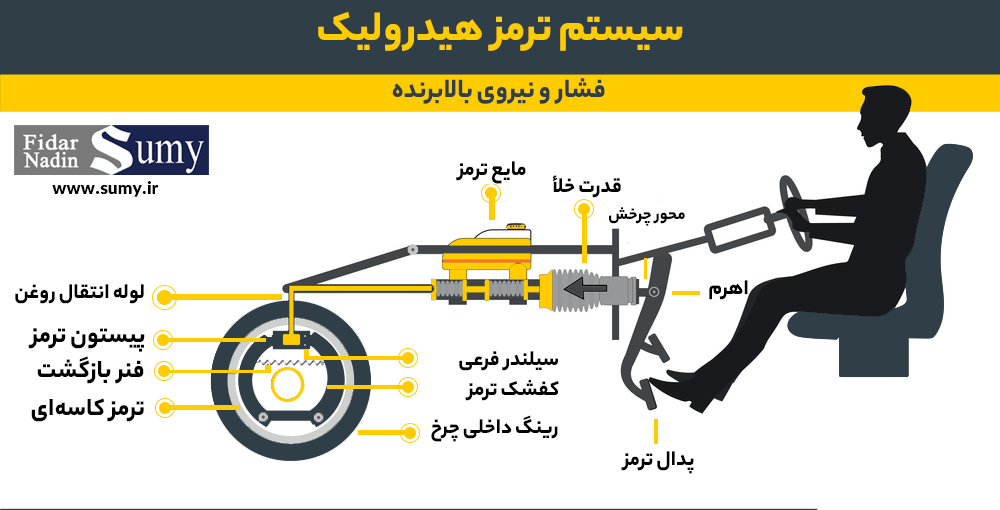
One of the most important automotive applications of hydraulics is the hydraulic braking system, which plays a vital role in vehicle safety. This system includes the brake master cylinder or pump, hydraulic brake fluid, lines, and brake cylinders. When the brake pedal is pressed, mechanical force is converted into hydraulic force, and this force is transmitted to the brake pads or shoes to stop the vehicle.
Advantages of a Hydraulic Braking System:
-
Greater braking forcewith less force required at the pedal.
-
Even pressure distributionacross the wheels to help prevent skidding.
-
Faster and more precise responsethan purely mechanical systems.
2. Hydraulic Steering System
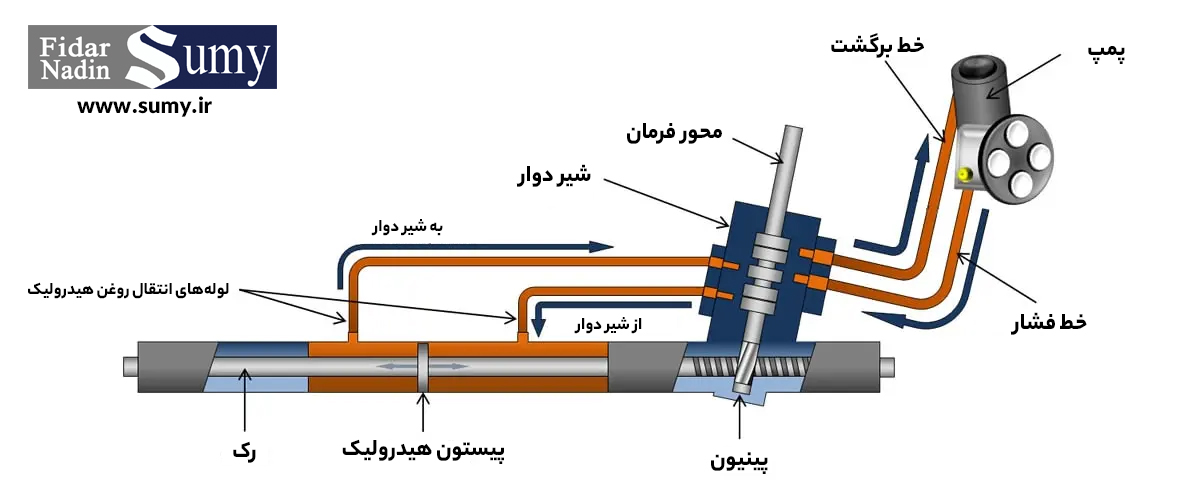
Hydraulic power steering is another important system in many vehicles and reduces the force required to turn the steering wheel. It includes a hydraulic pump, oil reservoir, hoses, and hydraulic cylinder or steering actuator. By generating hydraulic pressure, the system assists movement of the steering mechanism and wheels.
Advantages of Hydraulic Steering:
-
Reduced driver effortwhen turning the steering wheel.
- Improved vehicle controlat higher speeds.
-
Smoother movement and faster responsethan a purely mechanical steering system.
3. Hydraulic Suspension System
Hydraulic suspension is used in some luxury and heavy vehicles. The system uses hydraulic cylinders and hydraulic fluid to absorb road impacts.
Advantages of Hydraulic Suspension:
-
Improved passenger comfortthrough reduced shocks and vibration.
- Improved vehicle stabilityon uneven roads.
-
Better vehicle-height controlaccording to road conditions and speed.
4. Hydraulic Transmissions
Some vehicles use hydraulically controlled automatic transmissions that use hydraulic pumps and pressure-control valves to perform gear changes.
Advantages of Hydraulic Transmissions:
-
Smoother and faster gear changeswithout a manually operated clutch.
- Reduced wear of mechanical components.
-
Improved efficiency and reduced fuel consumptionin some designs.
Conclusion
Hydraulics plays an important role in improving vehicle safety, comfort, and performance. From powerful hydraulic braking systems to smooth and precise steering systems, hydraulic technology has helped improve the driving experience. As technology advances, hydraulic systems are expected to become smarter and more efficient and to continue playing a role in future vehicles.