ArticlesHydraulic ApplicationsHydraulicsRoad-Construction Machinery
Road-Construction Machinery
Road-construction machinery supports excavation, grading, compaction, concrete production and transport, and material handling. This guide reviews major equipment types used in construction and infrastructure projects.

Introduction to and Review of Road-Construction and Road-Maintenance Machinery
Road-construction machinery is among the essential equipment used in construction and infrastructure development. These machines facilitate excavation, grading, compaction, and material handling and therefore play an important role in civil-engineering projects.
Road-Construction Machinery: Concrete Transport
What matters in transporting concrete is maintaining its uniformity during transit and preventing significant changes in slump, meaning that the water-to-cement ratio should remain approximately constant. This section briefly describes dumpers and truck mixers as concrete-transport equipment.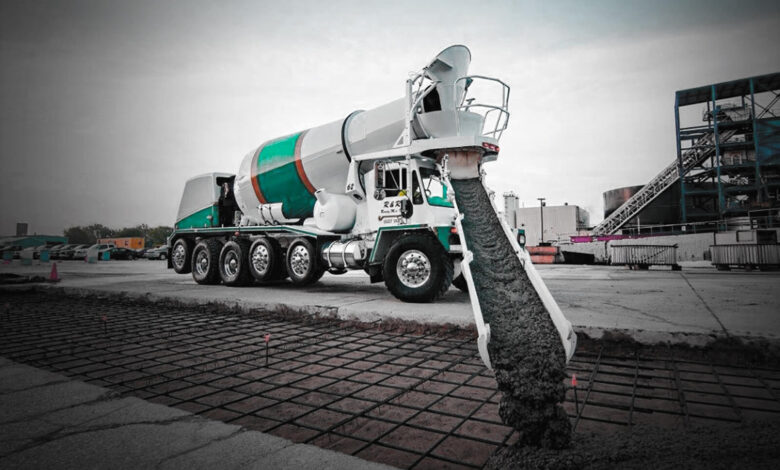
Road-Construction Machinery: Dumper
A dumper is a small transport vehicle suitable for use within a construction site. According to the source, it is most appropriate when the hauling distance is less than 1 kilometer. During transport, vibration should be kept from being transferred to the concrete, and the prepared concrete should be used within a maximum of 45 minutes.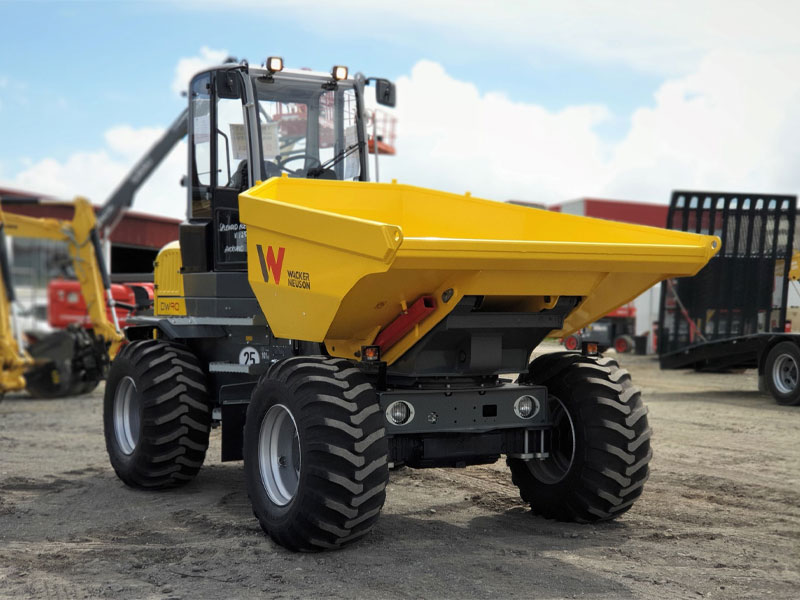
Road-Construction Machinery: Truck Mixer
A rotating concrete-transport truck is known as a truck mixer. It is used to carry concrete quickly from the batching facility to the placement location and can also be used over longer distances. The source gives a drum speed of 4 to 12 revolutions per minute and states that the concrete pump delivery line should consist of sections no longer than 3 meters each. When a truck mixer is used, the prepared concrete should be consumed within a maximum of 90 minutes. Water, cement, or other materials must not be added during discharge because doing so can reduce concrete strength; any required adjustment should instead be made in the mix design and at the batching plant.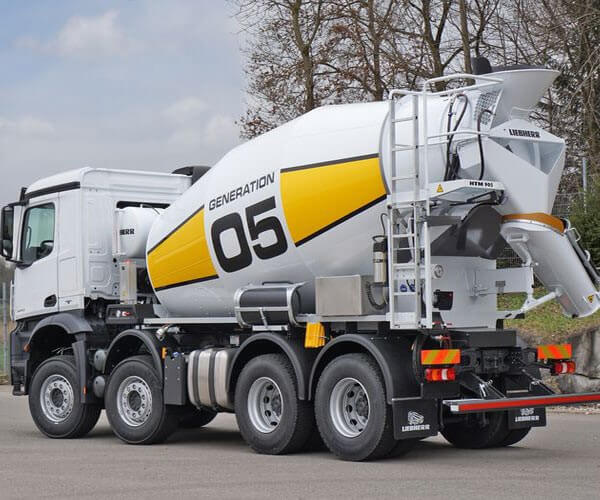
Road-Construction Machinery: Concrete Production and Mixing
The key requirement in concrete production is that the mixture be homogeneous and uniform in appearance and that aggregate surfaces be completely coated with cement paste.Stages of Machine-Based Concrete Production:
Measure sand, aggregate, and cement / load them into the drum or bin / dry-mix / add water / mix again / transport to the point of use / discharge the concrete. This section briefly describes concrete mixers and batching plants as concrete-mixing equipment.Road-Construction Machinery: Concrete Mixer
A concrete mixer is used to produce relatively small batches of concrete. The source describes common capacities of roughly 250 to 750 liters and considers this method suitable when both the total project volume and daily placement volume are moderate, around 25 to 30 cubic meters per day. Because materials may be measured volumetrically by workers, measurement errors are possible and concrete strength can vary between batches, so careful control is required.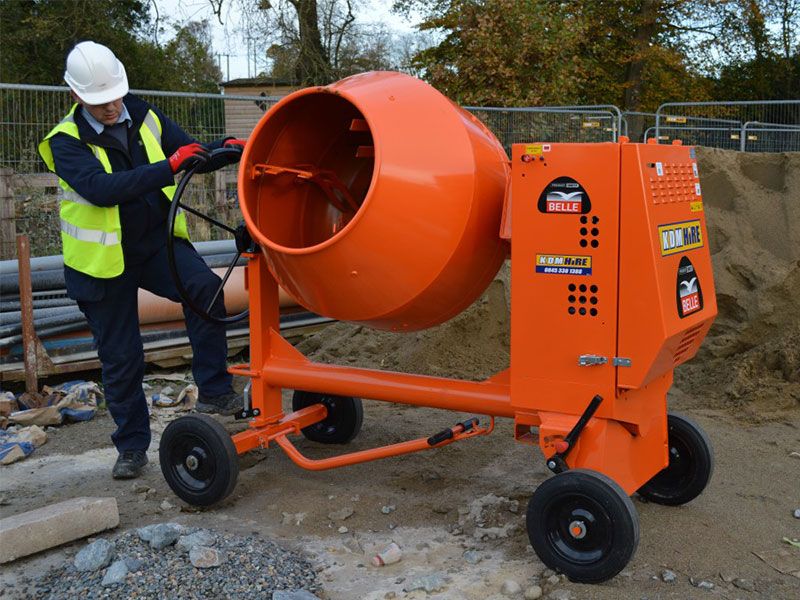
Road-Construction Machinery: Batching Plant
A batching plant is the core of a concrete-production station. Pumps and conveying equipment feed cement from silos and aggregate from stockpiles into the mixer in specified proportions, while a water pump supplies a controlled quantity of water. The materials are mixed and discharged into a truck mixer. Batching-plant capacity is commonly expressed according to mixer volume. The source cites mixer sizes of 0.5, 0.75, and 1 cubic meter as common in Iran and production capacities of about 40 to 120 cubic meters per hour for larger daily demand. Because the central batching process is automated, concrete produced during the same or different working days should show less variation. Materials are loaded into weighing systems, proportions are controlled from the control room according to the mix design, aggregates are conveyed to the mixer, and controlled amounts of water and cement are added before the finished concrete is discharged.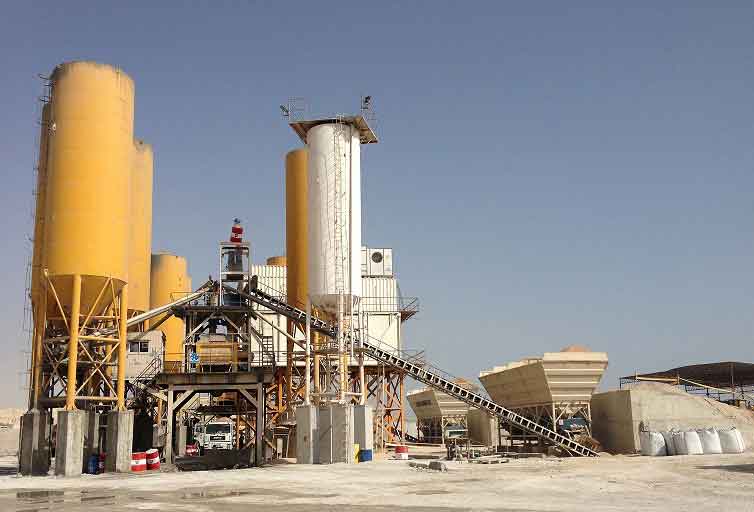
Road-Construction Machinery: Concrete Placement and Discharge
When placing concrete, it is important that the transported mixture enter the formwork without segregation. Because free fall can separate aggregate particles, it should be minimized as much as possible. Concrete may be placed using chutes, concrete pumps, buckets and cranes, rail-and-wagon systems, or belt conveyors. This section briefly discusses stationary and mobile concrete pumps and cranes as concrete-placement equipment.Concrete Pumps Are Available in Two Main Forms:
1) Stationary or ground-mounted pumps; 2) mobile or boom pumps. Concrete pumps are suitable for placement at substantial heights. The source considers concrete with a cement content of about 300 to 350 kg/m³ suitable for pumping, recommends air-entraining admixtures, and states that accelerators should not be used. A concrete slump of approximately 5 to 15 cm is given as suitable. Pumping places concrete directly at the point of use, reducing the need for other transport methods and making it particularly useful where access is difficult or restricted. The method can reduce material waste and labor requirements. Many pumps can reportedly deliver concrete to heights of about 25 meters and horizontal distances of about 60 meters, while high-pressure pumps can exceed these values. Modern concrete is often pumped through delivery pipelines over long distances and into locations that are difficult to reach by other methods. A typical pumping system includes a hopper, delivery pipes, and the pump itself. Many direct-acting pumps use a horizontal piston and semi-rotary valves designed to pass coarse aggregate. Concrete enters the pump under its own weight and piston-induced suction; alternating valve action then feeds the concrete into the pipeline and keeps it filled. The source states that outputs up to about 60 m³/h can be achieved with pipes up to 220 mm in diameter.Road-Construction Machinery: Crane
A crane consists of an operator cab, a long lattice boom, and the crane's lifting mechanism and is generally used to lift and move heavy objects. Different attachments can be installed at the end of the boom for other applications. Cranes may be mechanical or hydraulic, although modern machines are predominantly hydraulic.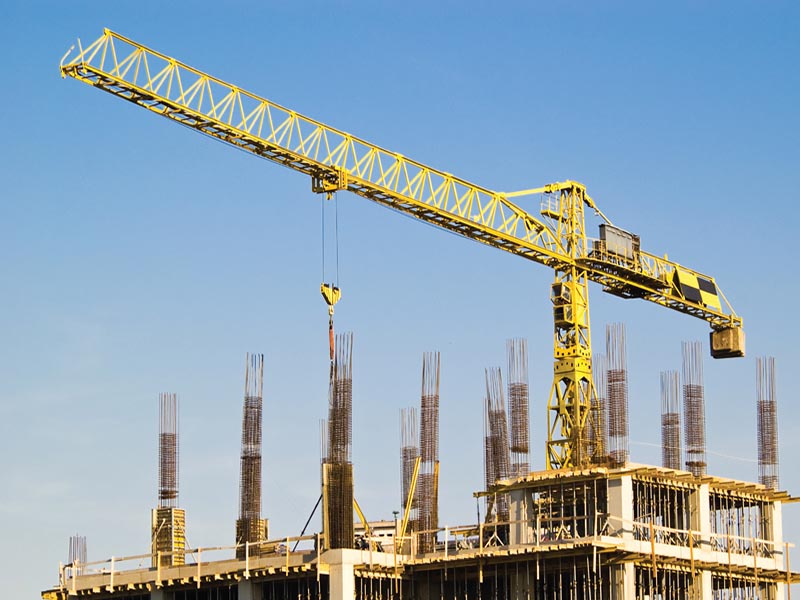
Road-Construction Machinery: Compactors
Compactors are used to prepare subgrades and compact small areas. The source gives compaction forces of roughly 1.5 to 3 tonnes depending on the machine type. Compactors are produced in different designs, including plate-type and spring-mounted forms, and with gasoline or diesel engines. They are used to compact channels and trenches cut into streets and to prepare surfaces before final asphalt placement. The source also discusses compressors for drilling surfaces and notes that air compressors are used in large-scale drilling for conventional wells and offshore exploration, typically with diesel fuel.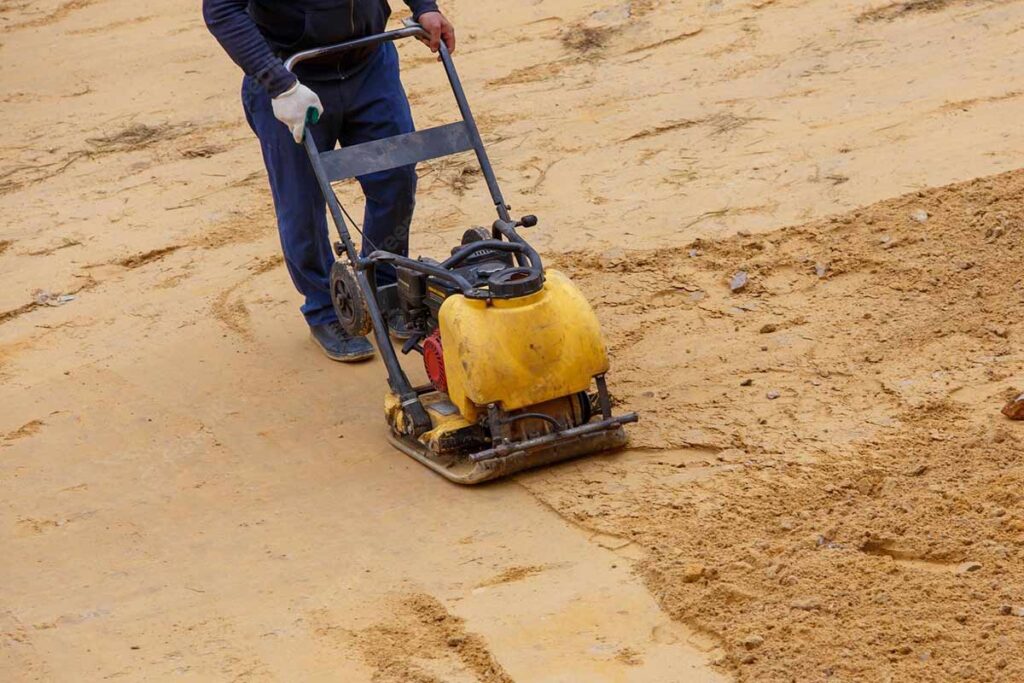
Road-Construction Machinery: Grader
A grader is used to establish slopes, shape embankments and cut faces, level earthwork surfaces, excavate ditches, and mix and spread bituminous materials and soil. It can also serve as a snowplow and is used for site clearing and removal of weak surface layers. Accurate grader operation can significantly reduce project costs. Moving soil from higher areas to lower areas with a grader is often called balancing, while final shaping and adjustment of each road layer is finishing or final grading.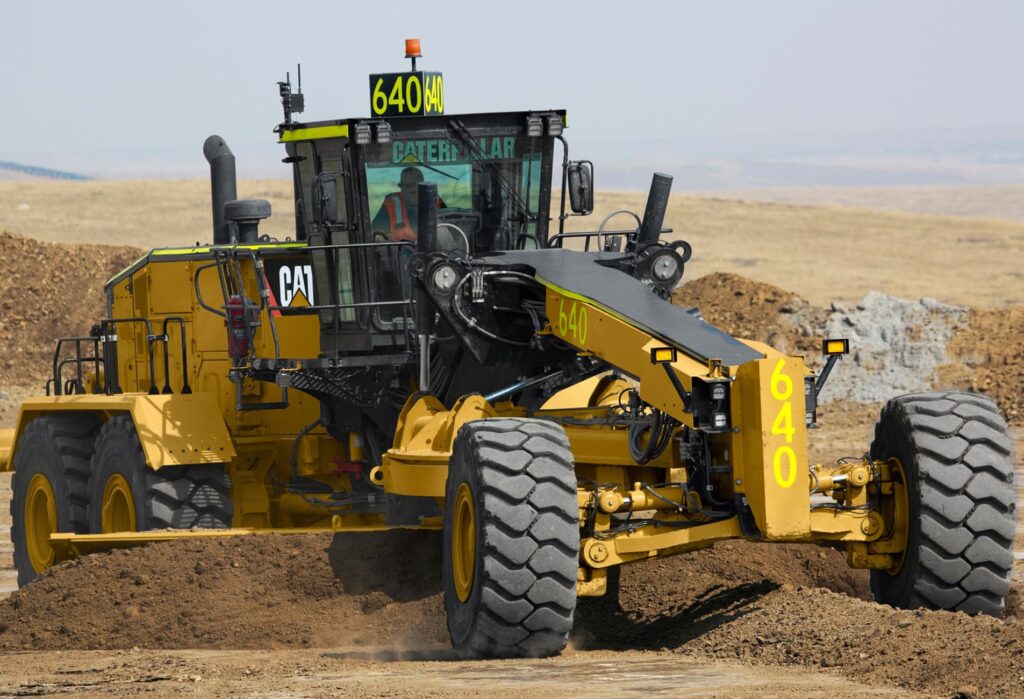
Road-Construction Machinery: Bulldozer
A bulldozer is suitable for site grading, road construction, and leveling uneven ground. It spreads soil along the roadbed and fills depressions, cuts soil for road construction, removes topsoil or mineral deposits, and can assist in constructing drainage works. The source describes it as particularly useful for side cutting on mountain slopes and for breaking hard or rocky ground without blasting. It states that the machine can work on slopes up to 100%, or approximately 45 degrees.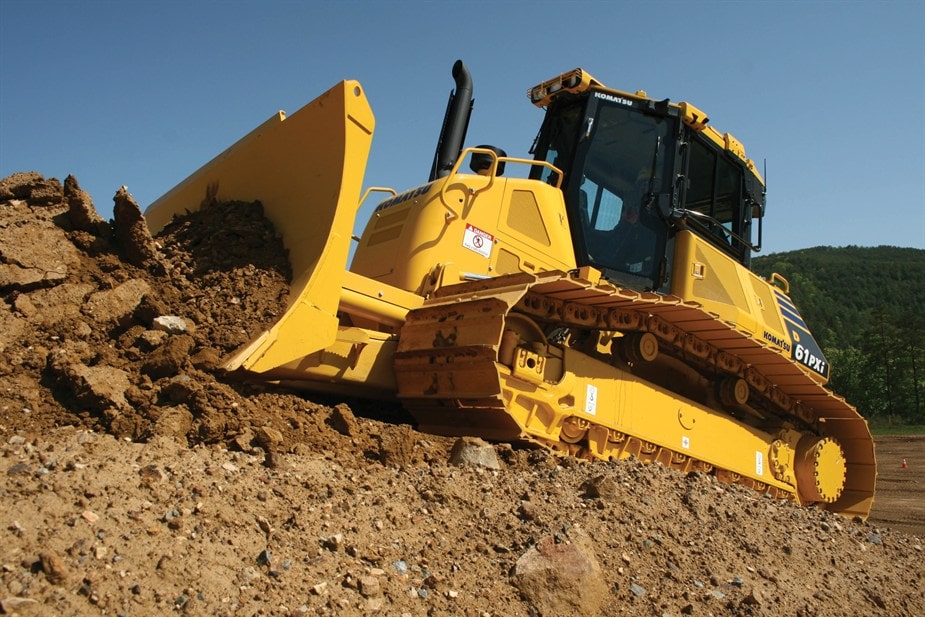 Wheel bulldozers are used on hard and medium ground, while crawler bulldozers are preferred on soft or sandy ground. Bulldozers have many applications, including clearing vegetation and tree stumps, opening initial access roads in mountainous and rocky terrain, pushing large volumes of soil, assisting scrapers, spreading fill, building soil piles beside excavated channels, clearing construction debris, maintaining temporary earth roads, and cleaning mine pits. A bulldozer uses a front blade, operated mechanically or hydraulically, that can be raised or lowered. The source distinguishes a conventional bulldozer with a fixed blade from an angle dozer with a blade that can be angled to push material both forward and sideways. Angle-dozer blade rotation in the vertical plane is stated as approximately 30 to 40 degrees. Bulldozers may also have a rear ripper for breaking hard ground. Articulated wheel bulldozers are sometimes called articulated or center-pivot machines; the joint improves maneuverability. Most conventional bulldozers are crawler-mounted, and bulldozers can also be used to tow other equipment such as scrapers.
Road-Construction Machinery: Dump Truck
A dump truck is a suitable vehicle for transporting construction materials and building blocks. The source gives truck capacities of approximately 4 to 40 cubic meters and describes dump trucks as an effective material-transport solution on large construction sites.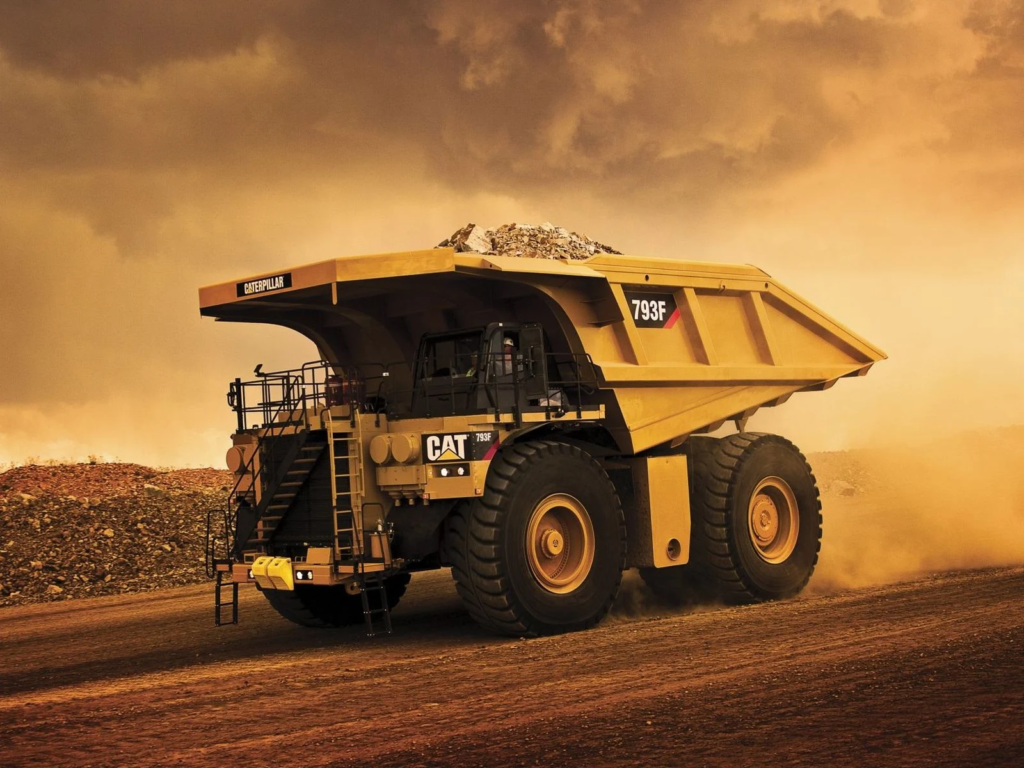
Truck
Although earth materials can also be moved by scrapers, belt conveyors, or trains, trucks are the most common method. Their relatively high speed on suitable roads and large capacities can reduce unit hauling cost. Truck fleets are also flexible because the number of vehicles assigned to a project can be increased or reduced to match required production. The source divides trucks into conventional rigid trucks and articulated trucks. Rigid trucks include highway and off-highway models; off-highway trucks can be built at very large sizes and capacities of several hundred tonnes, with dump bodies being particularly common. Dump trucks are highly flexible for material transport, especially road-going models that can move readily between projects. They may be diesel- or gasoline-powered, single- or multi-drive-axle, and built with two or three axles. Articulated trucks consist of an engine/power unit and a load body connected through an articulation joint and are specialized trailers or haulers for moving earth materials.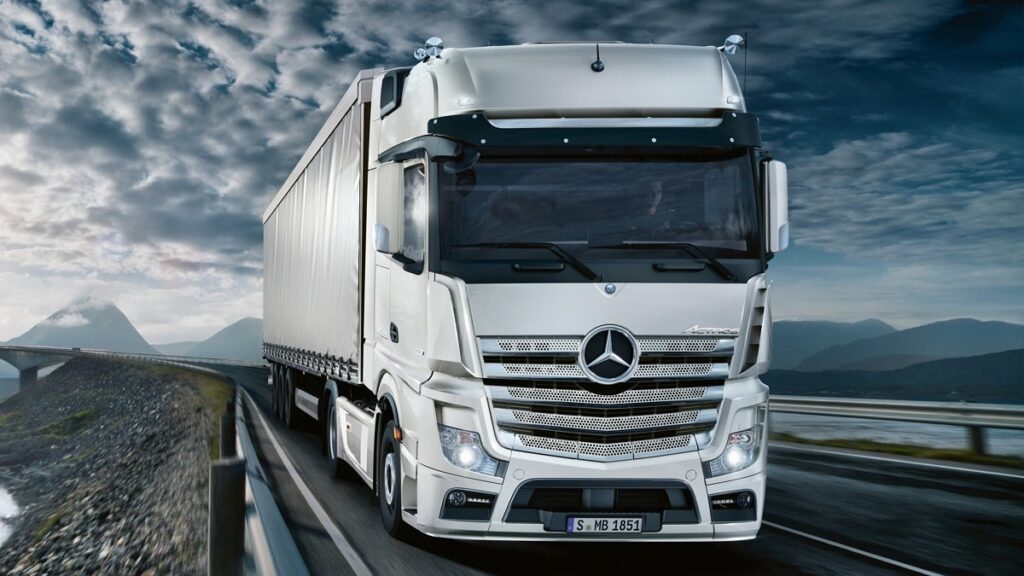
Loader:
The loader is one of the most versatile machines used in building and civil works. Produced in many sizes, it can perform numerous jobs because of its mobility, flexibility, and interchangeable buckets and attachments. Typical applications include building embankments, excavating basements, backfilling trenches, placing soil around buried pipes, loading trucks, carrying concrete to forms, and lifting and moving construction materials. Attachments can turn a loader into equipment for snow removal, trenching, pipe handling and laying, lifting, or forklift-style work. Loaders are widely used to move bulk material, load trucks, and excavate. Wheel loaders are generally used on hard and medium ground, while crawler loaders are preferred on soft and sandy ground.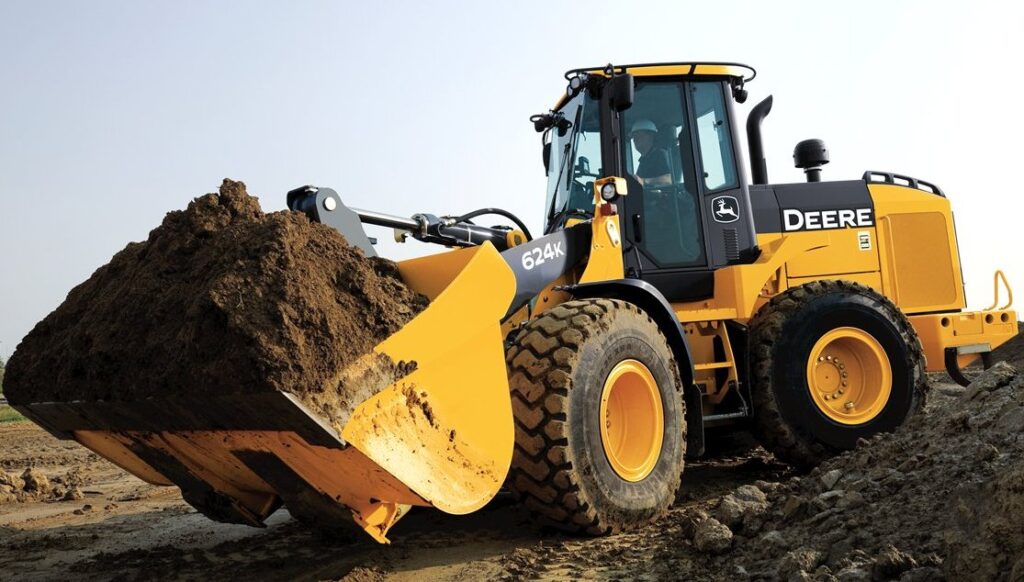
Types of Loaders:
– Wheel Loaders:
Wheel loaders are produced in sizes ranging from small to very large. Large pneumatic tires provide high mobility and speed while exerting relatively low ground pressure, which can be adjusted to some extent by changing tire pressure. Sharp rocks can damage the tires, and wheel loaders can be difficult to operate in wet or muddy ground. Protective tire chains may be used both to reduce damage and to increase traction, and newer heavy-tread tires can improve operation in rocky areas. Wheel loaders may use rigid or articulated frames. Articulated frames, particularly common on larger loaders, connect the rear and front sections through a joint and provide better maneuverability and a smaller turning radius than rigid frames. Modern loaders use hydraulic and electrical steering and control systems to improve operator comfort and performance. Conventional rigid loaders steer through wheel movement, while articulated machines steer using hydraulic cylinders at the articulation joint.– Crawler Loaders:
Crawler loaders perform functions similar to wheel loaders, but their lower ground pressure allows operation on ground that may not support wheel loaders. Their high traction helps them make effective use of engine power when digging, and tracks eliminate the risk of tire cuts on sharp rock. The source states that crawler loaders can operate on side slopes up to about 35%, compared with about 15% for wheel loaders, and can climb grades up to about 60%, compared with roughly 30% for wheeled machines. Their travel speed is much lower, however, so efficiency is reduced when haul and return distances are long.– Backhoe Loader
A backhoe loader is essentially a small loader with an excavator attachment at the rear and is used for light-duty work. Its general characteristics combine those of loaders and excavators. Because it performs two functions, it is widely used on smaller projects, especially trenching work. The digging force of the rear excavator varies with boom geometry, ground angle, and working radius, and manufacturers provide performance charts for different machine configurations.Scraper
A scraper loads, transports, and discharges earth material over medium to relatively long distances without requiring separate loading and hauling machines. It has three principal sections: the bowl or load compartment, the front gate or apron, and the rear ejector wall. The open bowl normally has a replaceable cutting edge at its lower front edge; during loading this edge penetrates and cuts the soil, directing it into the bowl. The bowl can be raised and lowered. On elevating scrapers, an elevator replaces or supplements the conventional front apron. The rear ejector moves forward and backward to push the material out during unloading. Scrapers may be powered or towed, although unpowered types are now less common. Many are single-axle units whose vertical load and balance are supported by the towing tractor. Towing tractors may be wheeled or tracked. Other configurations combine a single-axle tractor and scraper into an integrated tractor-scraper. Two-axle scrapers can be towed by crawler tractors. The source notes that crawler-towed scraper configurations are now relatively uncommon.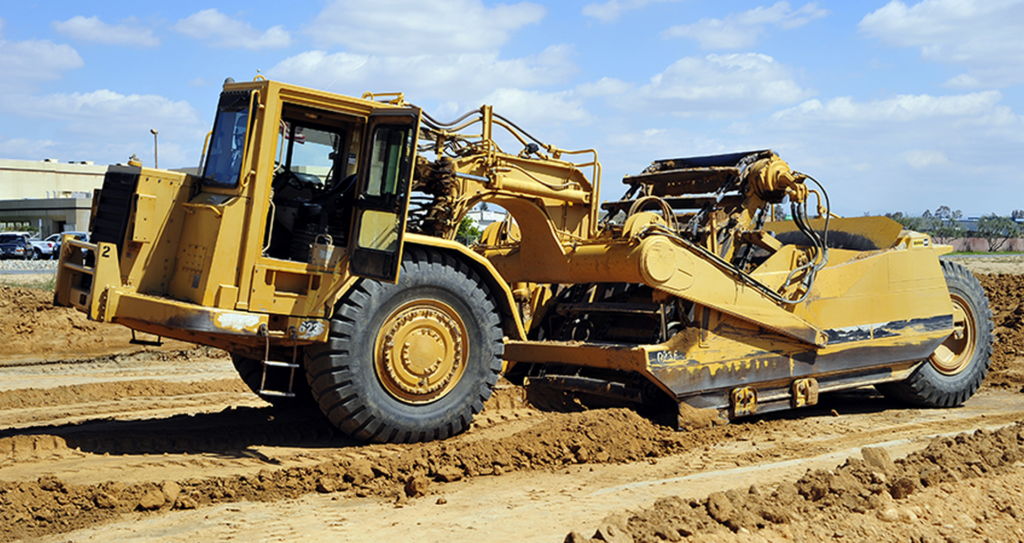
Tractor
The tractor is one of the most important machines in road and building construction and has many applications. Its primary function is to push or pull loads. Many attachments can be fitted, including excavating equipment, rippers, bulldozer blades, side-boom pipe layers, angle blades, and ditchers. Tractors can also tow scrapers, wagons, and other equipment. They are generally powered by diesel engines, often turbocharged, and are available with conventional or automatic transmissions.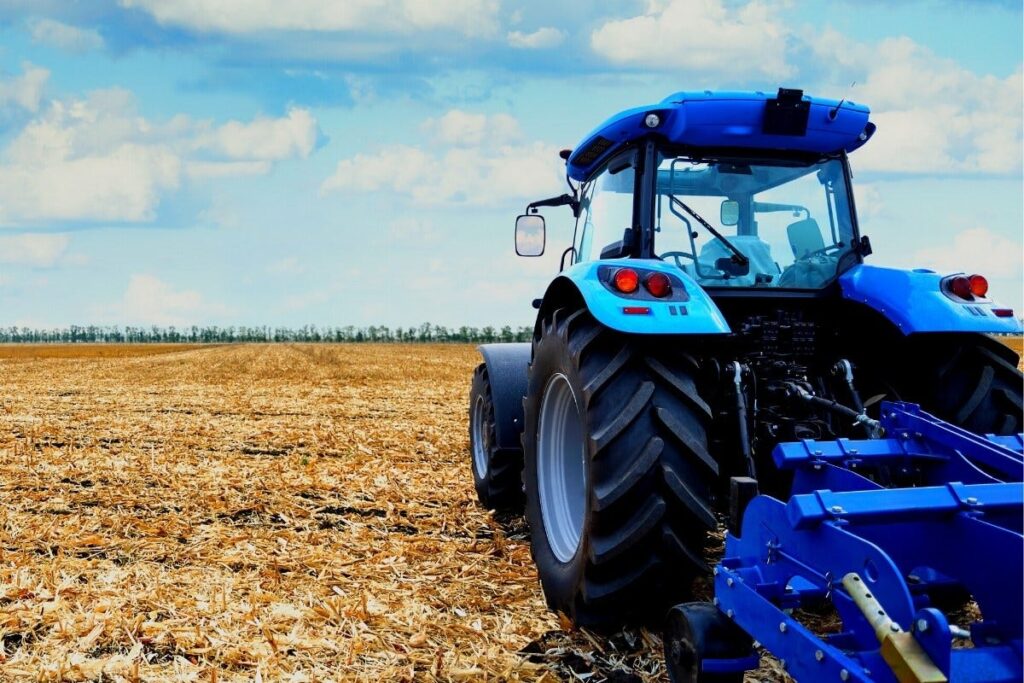
Types of Tractors:
A) Crawler tractors: Crawler tractors are produced in many sizes and are commonly classified by size, weight, and power. Machine weight is important because the maximum tractive effort is limited by the product of machine weight and the coefficient of traction at the ground surface, regardless of available engine power. Tracks allow operation on soils with relatively low bearing capacity while providing useful traction. B) Wheel tractors: Wheel tractors are designed to provide greater travel speed when towing or pushing scrapers and performing similar work. They are available in two-wheel and four-wheel configurations. A two-wheel tractor normally has to work with another machine, such as a scraper, to maintain stability. Four-wheel types are available with one or two driven axles. Tire vulnerability on sharp rocky ground can restrict their use, although protective chains may be fitted to reduce damage and improve traction.Excavators:
Excavators were among the earliest modern construction machines used for earthmoving. They are used mainly for digging soil and loading it into trucks, trailers, or conveyors. More powerful machines can excavate most soil types other than solid rock without preliminary breaking. An excavator has three basic sections: the undercarriage, the rotating upper structure or house, and the front attachment. Undercarriages are generally crawler or wheeled. A crawler undercarriage provides a stable platform, good mobility within an excavation site, and low ground pressure because of its large contact area, making it suitable for soft soils; its tracks also provide additional traction where slip is a concern. Its disadvantage is low travel speed. Wheeled undercarriages travel faster and can be more useful on smaller jobs involving frequent moves over firm surfaces. The source distinguishes self-propelled wheeled excavators from excavators mounted on a truck chassis and gives approximate maximum speeds of 50 and 80 km/h respectively.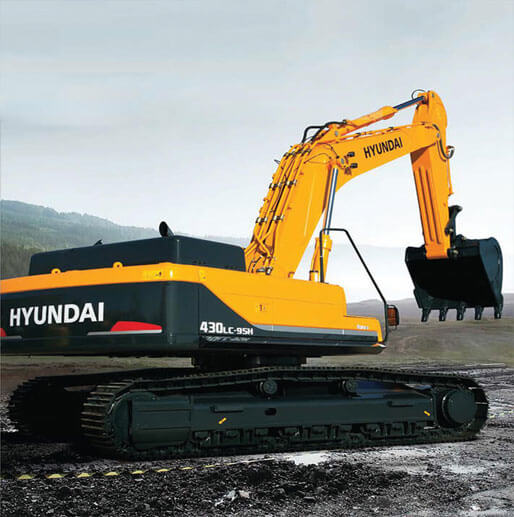
Types of Excavators:
A) Backhoe excavator: also known by several local names, this type may be mechanical or hydraulic and is suitable for excavation. B) Cable-operated excavator: a rotating upper structure mounted on a mobile undercarriage with a front excavating attachment; the source describes mechanical and hydraulic variants. C) Dragline: a dragline consists of an operator house, boom, drag bucket, and cables used to control its various sections. It can excavate well above or below its supporting level and is used on many ground types. Its long boom is useful for excavation and dumping, and a short work cycle is one of its advantages. D) Crane: a crane consists of an operator cab, a long lattice boom, and lifting machinery and is normally used to lift and move heavy objects. Different attachments may be connected to the boom for other uses. Cranes may be mechanical or hydraulic, with hydraulic machines being more common today.Hydraulic Circuit of a Tracked Vehicle with a Hydraulic Breaker Attachment