
Hydraulic Vane Pumps
Hydraulic vane pumps provide smooth, relatively quiet positive-displacement flow for medium-pressure systems. This guide explains their operation, variable-displacement control, efficiency, advantages, and speed limits.
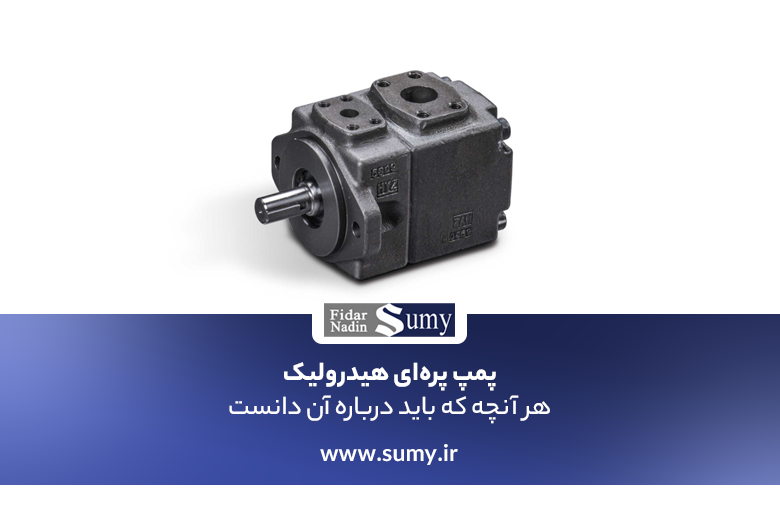
Hydraulic Vane Pumps: Everything You Need to Know
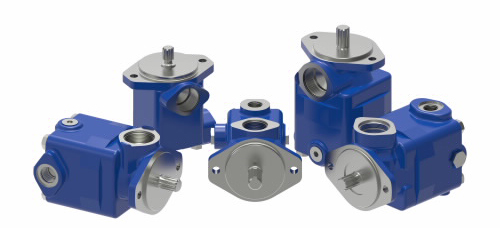
In Simple Terms, What Is a Hydraulic Vane Pump?
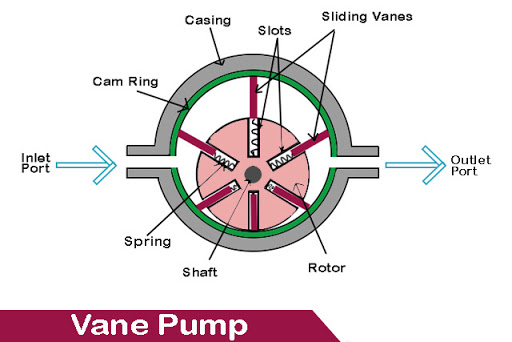
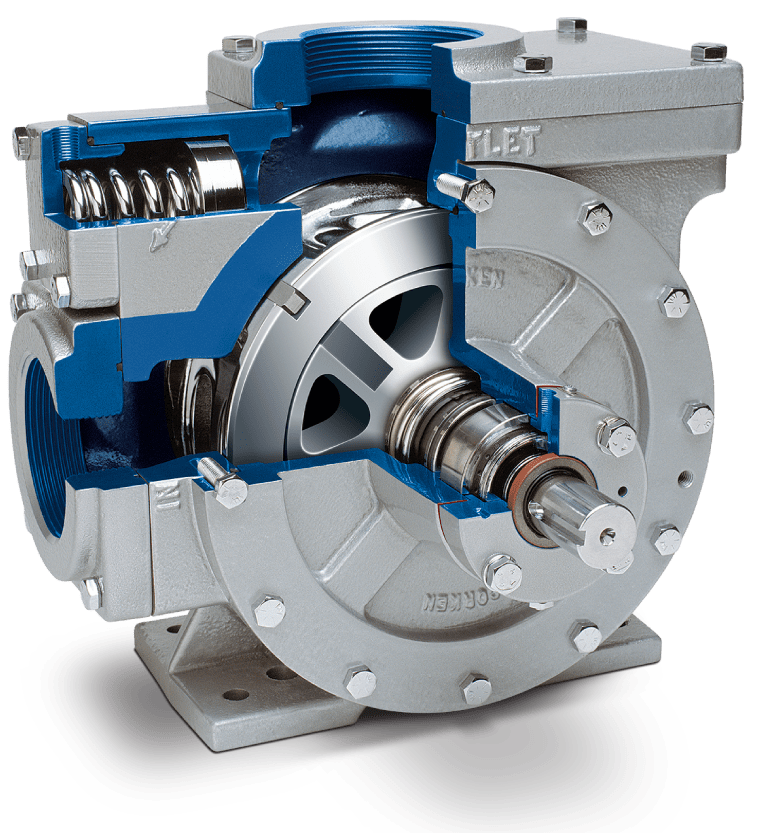
Hydraulic vane pumps are used in systems operating at pressures up to about 200 bar. Two notable characteristics of this pump type are relatively quiet operation and smooth, unrestricted pumping. In these pumps, the pumping ring is circular and positioned eccentrically relative to the rotor.
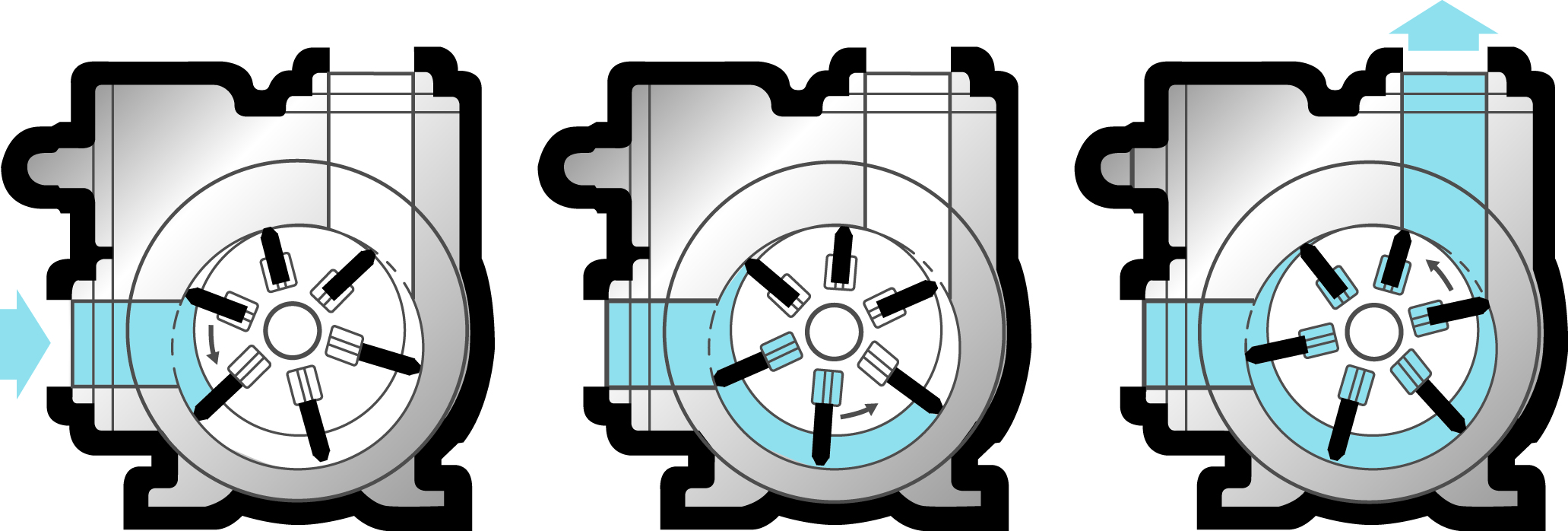
The amount of eccentricity determines pump displacement; if eccentricity becomes zero, the pump displaces no oil. Suction and oil transfer are produced by the movement of the rotor and vanes.
On the suction side, the spaces between the vanes increase in volume and fill with oil. On the pressure side, these spaces become smaller and force the oil into the pressure port.
An important point is that, according to the source, inlet pressure should not fall to approximately 0.1–0.2 bar in a way that promotes bubble formation.
Variable-Displacement Vane Pumps with Mechanical Control
In this type of vane pump, the displaced oil volume and the maximum pressure applied to the pump can be adjusted, while the source describes oil delivery as occurring through a controlled displacement mechanism.
When the force generated by pressure equals the spring's initial compression force, the cam ring moves toward the center, reducing flow while pressure remains approximately constant. The source recommends using appropriate spring characteristics to improve pump response and performance.
In these vane pumps, a relatively weak spring acts on the larger piston and holds the cam ring in an eccentric position. When the pump starts, system pressure is initially low and the spring establishes the pump's operating position. A pressure-regulating spool is located at the orifice and maintains a nearly constant pressure difference across it, helping maintain steady flow. The spring is important in pressure adjustment and, depending on its specification, the source gives a control differential of approximately 6 to 8 bar.
If the valve setting at the pump orifice is changed, the pressure difference increases and the spool moves against the spring. Pressure in the chamber behind the piston is then connected to the tank. The smaller piston moves the cam ring toward the center and pump delivery decreases. This continues until the pressure difference returns to approximately 6 to 8 bar.
Learn More!Hydraulic pumpwhat is it?
Advantages of Variable-Displacement Vane Pumps
- Setting the flow to an optimum value reduces energy consumption.
-
- Smaller reservoirs can be used in the system.
- Because these pumps can reduce the need for pressure-relief valves and separate on/off valves in some control arrangements, the hydraulic circuit can be simplified.
1. Vane-Pump Performance at Medium Pressure
Vane pumps generally perform well at medium pressures. The source states that, at speeds of about 1,200 to 1,750 rpm, or up to roughly 2,400 rpm with an internal-combustion-engine drive under suitable pressure and speed settings, mechanical efficiency may be about 85% to 90%.
2. Leakage and Its Effect on Overall Efficiency
Because leakage can occur around the rotor, overall efficiency is lower and is stated in the source as typically about 75% to 87%.
3. Springs and Pressure Pins for Maintaining Vane-to-Housing Contact
Light springs are commonly used to maintain good contact between the vanes and housing, although pressure pins may also be used.
4. Speed Limits and Low-Speed Operation
These pumps are generally not suitable for speeds below about 600 rpm. However, if springs or other devices are used to press the vanes against the housing, the source states that operation at approximately 100 to 200 rpm may be possible because vane contact with the housing is maintained.
5. Wear and Its Effect on Pump Performance
As wear occurs, the vane can extend farther from its slot and continue to maintain sealing contact. This behavior can contribute to long pump life and sustained performance over time.