
ArticlesHydraulicsGear PumpHydraulic PumpBuy Hydraulic PumpsHydraulic Gear PumpBuy Gear PumpsHydraulic Valve
Hydraulic Gear Pumps
Hydraulic gear pumps are positive-displacement pumps that move fluid using rotating gears. This guide covers internal and external gear pumps, applications, materials, benefits, limitations, and selection factors.
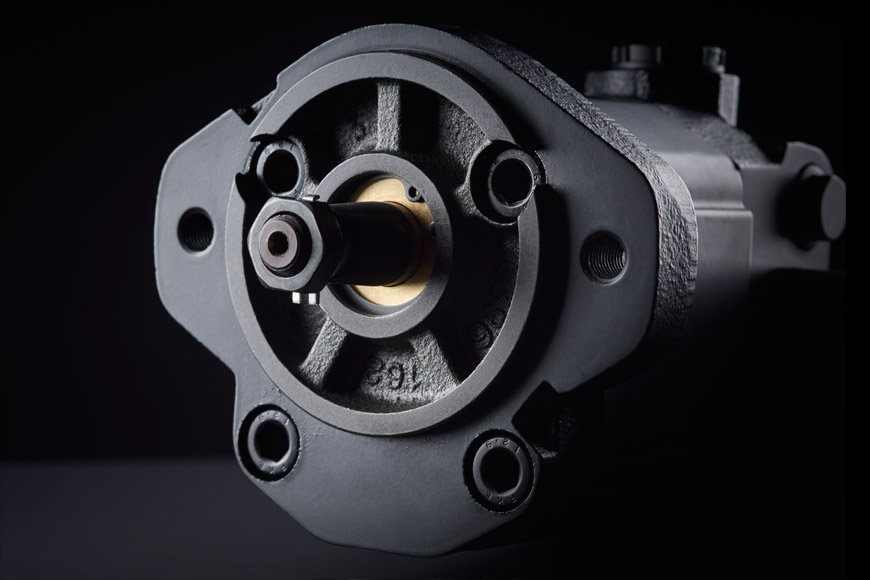
Everything You Need to Know About Hydraulic Gear Pumps
[caption id="attachment_957" align="alignnone" width="850"]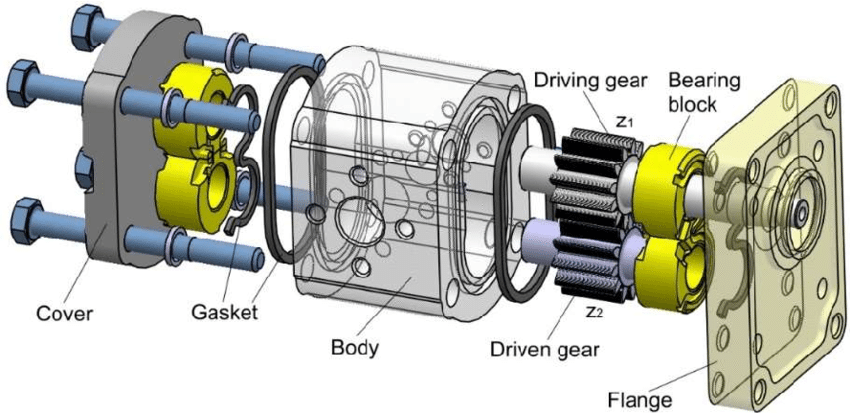 View of hydraulic gear-pump components[/caption]
Hydraulic Gear Pump
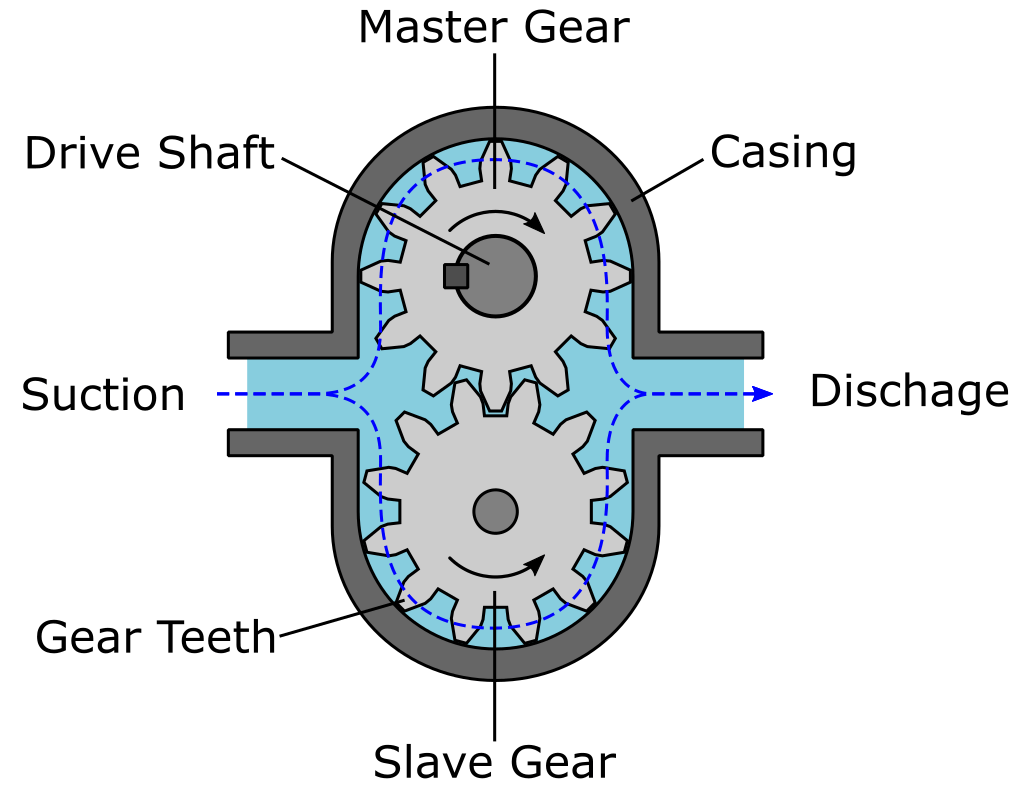
A hydraulic gear pump is a positive-displacement pump. At the inlet side, rotating gears move apart at the meshing point, creating a low-pressure region that allows fluid to enter the pump. Continued gear rotation carries the fluid around the housing toward the outlet. Hydraulic gear pumps are designed to move liquids at relatively high pressure and with substantial density, but they are best suited to clean, non-corrosive liquids that provide some lubricating property. Examples given in the source include engine lubrication systems, fuel, molasses in the sugar industry, pulp, and low-pressure cooling systems for machine tools and combustion equipment. Because a gear pump is positive displacement, closing its discharge valve can damage downstream equipment and the pump itself. For this reason, a bypass or relief path is used at the outlet so that if pressure exceeds the permitted level, the valve opens and fluid returns through the bypass to the suction side.Speed in Gear Pumps
Different pump speeds are selected according to the application. For fluids with high density and greater viscosity or poorer lubricating properties, lower pump speeds are generally used, which can increase processing time. Thinner, lower-density liquids can usually be pumped at higher rotational speeds.Important Factors When Selecting a Hydraulic Gear Pump
- The environment in which the pump will be used.
- The required maximum and minimum pressure.
- The required speed range.
- The maximum and minimum operating temperatures.
- Required service life.
- Ease of repair.
- Available budget.
You May Also Want to Read:Everything You Need to Know About Hydraulics
External-Gear Pump
The flow rate of an external-gear pump can be determined by its internal geometry and rotational speed, and these pumps can provide accurate metering. The source lists applications involving acids, bases, polymers, fuels, machine tools, power transmission, and hydraulic systems. Large external-gear pumps may operate around 650 rpm, while smaller units may operate at 1,450 or 3,000 rpm. Their long service life, relatively low price, and ability to handle a broad range of fluids have made them widely used in many applications.Applications of External-Gear Pumps
- Food-industry applications
- Pumping lubricants
- Use in edible-oil production plants
Materials Used in External-Gear Pumps
Pump bodies and gears may be made from materials such as steel, cast iron, bronze, PTFE, or other polymers. Shafts may use steel, ceramic, aluminum, or alloy steel, while bushings may be bronze, carbon, or steel. Sealing systems can include single or double mechanical seals, packing, or magnetic-drive arrangements.Advantages of External-Gear Pumps
- Low cost.
- Good resistance to dusty environments.
- Relatively quiet operation and ability to run for long periods.
- Straightforward repair without highly specialized tools.
- Available in a variety of materials such as steel and bronze.
- Long service life.
Disadvantages of External-Gear Pumps
In bushing-type designs, the bearings or bushings are exposed to the pumped fluid, so solid or abrasive particles can cause wear of the gears and bearing surfaces.Internal-Gear Pump
Internal-gear pumps are often described as having a moon-and-star gear arrangement. They are self-priming and can rotate in both directions, allowing them to be used for both filling and emptying. They can handle fluids ranging from thin liquids such as solvents and oils to viscous materials such as asphalt, chocolate, and adhesives. The source also lists hot oils and food products such as peanut butter, as well as paint, ink, soap, and similar products. Bodies and gears may use alloy steel, cast iron, stainless steel, bronze, or PTFE. Bushings may be carbon graphite, silicon carbide, ceramic, or bronze. Shafts may be stainless or alloy steel, and sealing options include single or double mechanical seals, cartridge seals, magnetic drives, and packing. [caption id="attachment_959" align="aligncenter" width="497"]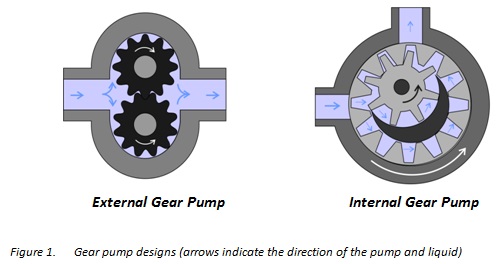 Internal- and external-gear pumps[/caption]
Advantages of Internal-Gear Pumps
- Self-priming capability.
- A variety of body materials can be selected according to the application.
- Smooth, pulse-free operation.
- Bidirectional rotation for filling and emptying a tank.
- Low NPSH requirement, which helps reduce cavitation risk.
- Relatively low-cost maintenance and repair.
- Compatibility with various inlet and outlet connection types.