
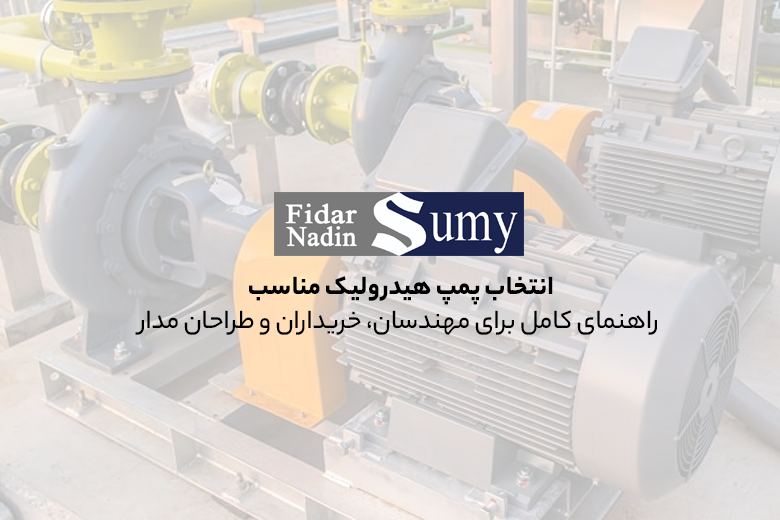
Choosing the Right Hydraulic Pump: A Complete Guide for Engineers, Buyers, and Circuit Designers
Selecting the right hydraulic pump requires balancing flow, pressure, duty cycle, oil viscosity, drive power, control requirements, contamination tolerance, temperature, installation, and maintainability.
Introduction
The hydraulic pump is the beating heart of a hydraulic system. This key component converts mechanical energy into hydraulic energy and creates oil flow that enables other components to move. Selecting the right pump affects not only precise system operation but also equipment life, energy consumption, and maintenance cost. This technical article examines the key factors involved in selecting a suitable hydraulic pump from a practical engineering perspective.
Important Factors in Selecting the Right Hydraulic Pump
- Required system flow rate
- System working pressure
- System duty cycle (continuous or intermittent)
- Oil viscosity and hydraulic-fluid type
- Drive-motor power and speed
- Flow- and pressure-control method
- Oil contamination and pump sensitivity
- Environmental conditions and operating temperature
- Installation and maintainability considerations
1.Required Flow Rate
Flow rate is the volume of oil pumped per minute, commonly expressed in liters per minute (L/min). It is determined by the motion required from actuators such as hydraulic cylinders or motors.
✔️ Key Points:
-
Higher flow = higher cylinder or hydraulic-motor speed.
-
Lower flow = potentially finer control and slower motion.
-
Flow should be selected according to the highest system demand at peak operating load.
Approximate Formula:
Q = V × N / 1000-
Q = flow rate (L/min)
-
V = pump displacement (cm³/rev)
-
N = rotational speed (rpm)
2.System Working Pressure
The pump must be rated to support the pressure required to overcome the loads in the system. Two pressure parameters are especially important when selecting a pump:
-
Continuous working pressure: the pressure the system is expected to sustain continuously.
-
Peak or maximum pressure: short-duration pressure under critical conditions or heavy loading.
✔️ Technical Recommendation:
Select a pump whose maximum pressure rating is about 10% to 20% above the system's actual working pressure. This safety margin helps protect the pump under unusual operating conditions.
3.System Duty Cycle (Continuous or Intermittent)
The system's operating pattern has a major effect on the required pump type and rating:
-
Continuous Duty:Requires a more robust pump, suitable cooling, and a design intended for prolonged operation.
-
Intermittent Duty:May allow the use of a simpler or more economical pump.
If the pump starts and stops several times during each operating cycle, it should be capable of tolerating rapid changes in pressure and temperature.
4.Oil Viscosity and Hydraulic-Fluid Type
Viscosity describes a fluid's resistance to flow. Higher viscosity makes oil harder to move, while excessively low viscosity can increase leakage and reduce pressure capability.
✔️ Practical Points:
-
Vane and piston pumps are generally more sensitive to hydraulic-oil viscosity.
-
In cold regions or applications with large temperature swings, such as road-construction projects, oils with a high viscosity index (VI) are recommended.
5.Drive-Motor Power and Speed
The pump must be matched to its power source, whether an electric motor or diesel engine.
The required drive power can be estimated from the following relationship:
P =
Q × Ps / 600-
P = motor power (kW)
-
Q = flow rate (L/min)
-
Ps = pressure (bar)
Selecting a drive motor with less power than required can cause reduced efficiency and motor overheating.
6.Flow and Pressure Control
Depending on the system, a controllable pump may be required. In that case, features such as the following should be considered:
-
Pressure Compensator: maintains pressure while pump flow changes.
-
Load Sensing: adjusts pressure according to the load.
-
Variable Displacement: changes pump displacement during operation.
These features are found mainly in piston pumps and are suitable for systems with variable operating conditions or dynamic loads.
7.Oil Contamination and Pump Sensitivity
Some pumps, particularly vane and piston pumps, are sensitive to small contaminant particles caused by wear, dust, leakage, and other sources. In such applications:
-
A suitable high-efficiency filter with an appropriate micron rating is required.
-
A scheduled program for replacing filters and hydraulic oil is essential.
-
Selecting a pump with high contamination tolerance is recommended for dirty industrial environments.
8.Environmental Conditions and Operating Temperature
High temperature can reduce viscosity, increase oil leakage, reduce pump efficiency, and damage seals.
At low temperatures, oil becomes more viscous and the pump is subjected to additional load.
In demanding environments such as:
-
Open-pit mines
-
Desert workshops and sites
-
High-temperature production lines
the use of pumps with suitable temperature capability or the addition of a system cooler is recommended.
9.Installation and Maintainability Considerations
Before making the final selection, the following points should also be checked:
-
Pump dimensions and available installation space
-
Connection arrangement, including flange, shaft, foot-mounted, or non-foot-mounted configuration
-
Pump direction of rotation, clockwise or counterclockwise
-
Ease of repair and replacement of wear or service components
🔹 Pumps with modular designs, or products from manufacturers with strong technical support, can be better choices for long-term industrial projects.
Conclusion
Selecting the correct hydraulic pump requires a clear understanding of system requirements, operating conditions, and the technical characteristics of different pump types. Focusing only on purchase price while ignoring flow, pressure, viscosity, and manufacturing quality can lead to higher maintenance cost and greater system downtime over the long term.
By considering the factors above, you can select a pump that is accurate, stable, and appropriately matched to the application.
Read More:Hydraulic Pumps
Request Technical Advice or Order a Suitable Pump
At Fidar Nadin Sumy, we are ready to help you select the best option through specialist consultation.