
Hydraulics
Hydraulics is an engineering discipline that uses pressurized fluids to transmit power and control motion. It is widely applied in automotive, agricultural, aerospace, and industrial systems where high force and efficient control are required.

Everything You Need to Know About Hydraulics
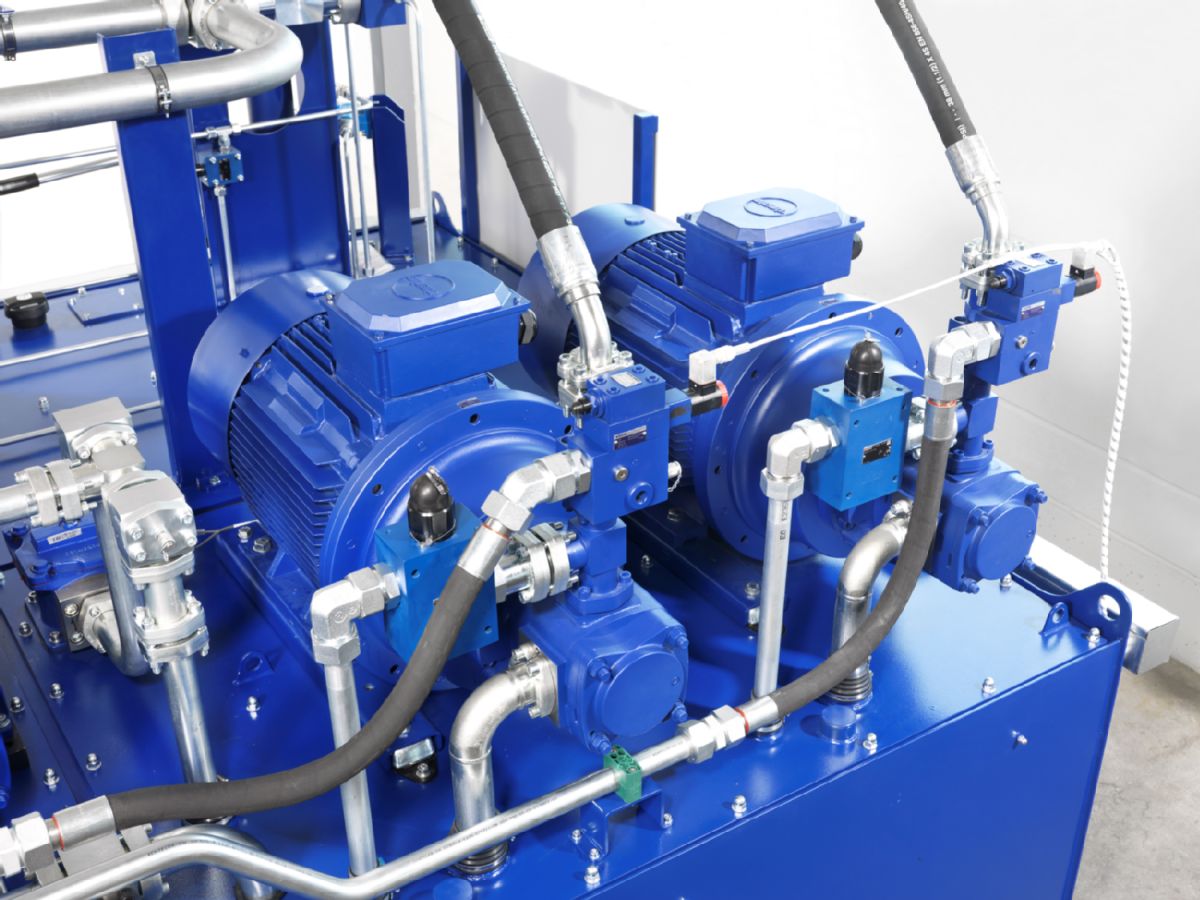
Hydraulics, (in French: Hydraulique, Hydraulique) (in English: Hydraulics, Hydraulics) is a field concerned with the applied use of fluids under pressure.
Definition of Hydraulics
Hydraulics is an engineering discipline concerned with the practical use of pressurized fluids.
Applications of Hydraulics
Hydraulics is used in many parts of the automotive industry. Common examples include braking systems, vehicle steering, and pneumatic seat adjustment. In vehicle manufacturing, hydraulic systems are also used for body production and sheet-metal forming.
Agriculture
Hydraulic systems are used in tractors, where fluid power is applied to a wide range of functions. Other examples include threshers, combines, fruit-picking machines, drilling machines, excavators, and similar equipment.
Aircraft
Hydraulic systems are used in aircraft components such as landing gear, ailerons, and elevators. Air pressure may also be introduced between body panels during testing to detect leaks or openings; a pressure drop can indicate a defect.
Aircraft testing covers many stages and components, including the following examples:
Testing aircraft tires, which according to the source requires a pressure of 300 bar.
Testing various hydraulic sections of the aircraft.
Testing the aircraft body for openings or leaks.
On F-14 aircraft, the source states that a Mule unit is used for hydraulic testing.
Other applications of hydraulics across a broad range of industries include:
In the food industry, for canning and the manufacture of disposable containers.
In defense industries, for controlling tanks, armored personnel carriers, missiles, and naval vessels.
In the woodworking industry, for cutting wood and finishing furniture surfaces.
In printing, mining, railways, oil, plastics, and other industries.
Modern industry seeks power-transmission methods that combine low cost with high precision, and pressurized fluid is widely used to meet this need for power transmission and control. Fluid-power technology is commonly divided into hydraulics and pneumatics. Pneumatics is used for lower forces, stated here as about one tonne, and higher speeds, while hydraulics is better suited to high power and controlled speeds.
Advantages of Hydraulic and Pneumatic Systems
1. Simple and Efficient Design
Hydraulic and pneumatic systems can use fewer moving components while providing high-power linear and rotary motion with precise control. Power is transmitted through pipes and hoses, whereas mechanical systems rely on components such as gears, cams, clutches, and other mechanical elements.
2. High Force Adjustment and Control Capability
One notable feature of these systems is their ability to generate a large force from a relatively small input force. The generated force can also be controlled with relatively low pressure and power, improving operating precision.
3. Flexibility in Installation and Implementation
Flexible hoses make these systems easier to install under different conditions. This reduces mechanical constraints and provides greater flexibility in design and implementation.
4. High Efficiency and Low Maintenance Cost
Hydraulic and pneumatic systems can provide high operating efficiency because of relatively low friction, low maintenance requirements, and economical construction. Relief valves and pressure and temperature switches also improve safety and resistance to sudden loads and severe changes in temperature and pressure.
5. Differences Between Hydraulic and Pneumatic Systems
The operating principles of the two systems are similar, but the main difference is the working fluid. Hydraulic systems use nearly incompressible fluids such as oil, whereas pneumatic systems use compressible fluids such as air. In a pneumatic system, a compressor compresses air and stores it in a tank; compression raises the air temperature, which can affect the system if not managed properly.
6. Heat and Moisture Management in Pneumatic Systems
To reduce problems caused by increased temperature in pneumatic systems, compressed air is cooled before entering the tank. Because the air contains water vapor, cooling can cause condensation, so drying systems are used to remove moisture and improve performance.
7. Component Naming and Identification for Easier Design
As technology and industry have developed, hydraulic and pneumatic components have been standardized, identified, and named to simplify design and implementation. This helps designers prepare schematics more quickly and enables technicians to implement them more easily.
Pressure Adjustment in Hydraulic Systems
According to the source, higher pressure in hydraulic systems can allow smaller components and smaller-diameter piping to be used to achieve the required tonnage, reducing the construction cost of a press. Increasing pressure also raises oil temperature, which can increase friction and wear; service intervals may therefore need to be shortened to reduce the risk of failure.
Effect of Increased Fluid Viscosity in Hydraulic Systems
Fluid viscosity determines resistance to flow and therefore affects movement and friction within a hydraulic system. Selecting a fluid with a viscosity appropriate to the specific system is important. Excessive viscosity can cause the following problems:
Greater resistance to fluid flow in the hydraulic system.
Greater power demand and, consequently, increased friction losses.
Pressure loss in the system.
Higher temperature caused by friction.
Effect of Reduced Fluid Viscosity in Hydraulic Systems
Leakage at sealing points.
Wear and breakdown of the oil film on moving components.
Energy and Power in Hydraulic Systems
The prime mover, which may be electric or combustion-driven, is the energy source of a hydraulic system. It turns the pump shaft and transfers energy into the system. Under the law of conservation of energy, energy is neither created nor destroyed; within the system it appears in forms including potential and kinetic energy. If system energy is calculated correctly, an energy balance can be established. This balance is based on Bernoulli's principle and considers not only fluid energy but also energy losses caused by friction in pipes, valves, and fittings, together with mechanical losses in the motor and pump.
Common Problems in Hydraulic Systems and How to Address Them
1. Pump Cavitation
Cavitation is a common problem in hydraulic systems and can occur in both older and newer pumps. It can cause excessive noise and reductions in system pressure and speed. Under these conditions, the suction-filter path may gradually become restricted, disrupting system performance.
2. Cleaning the Filter and Checking Pump Performance
After cleaning the filter and strainer, if the problem remains, the pump and pressure-relief valve should be checked. The source describes disconnecting the pump outlet from the directional valve, starting the pump, and then tightening the relief-valve adjustment until pressure appears on the gauge. If adequate pressure is not produced, other parts of the system should be investigated.
3. Checking Relief-Valve Operation and Oil Flow
If adequate pressure is not produced, the discharge section of the relief valve should be inspected. If loosening and tightening the adjustment screw does not change oil flow, a pump fault may be present. The source notes that under such conditions oil may enter internal parts of the pump and, together with high temperature, contribute to wear.
4. Diagnosing a Faulty Pressure-Relief Valve
One simple troubleshooting method is to replace the pressure-relief valve. To inspect the valve, its throat or orifice area should be checked for foreign particles and cleaned if necessary. In threaded valves, spool movement should also be checked to ensure that it is not sticking.
5. Checking Cylinder Seals and Oil Leakage
If the problem persists, downstream parts of the circuit, such as cylinder seals, should be checked. The piston can be moved to one side and pressure applied; leakage at the front or rear ports can then be used to assess seal condition, with defective seals replaced as necessary. The source also notes that minor surface scratches in a cylinder do not usually have a major effect on operation.
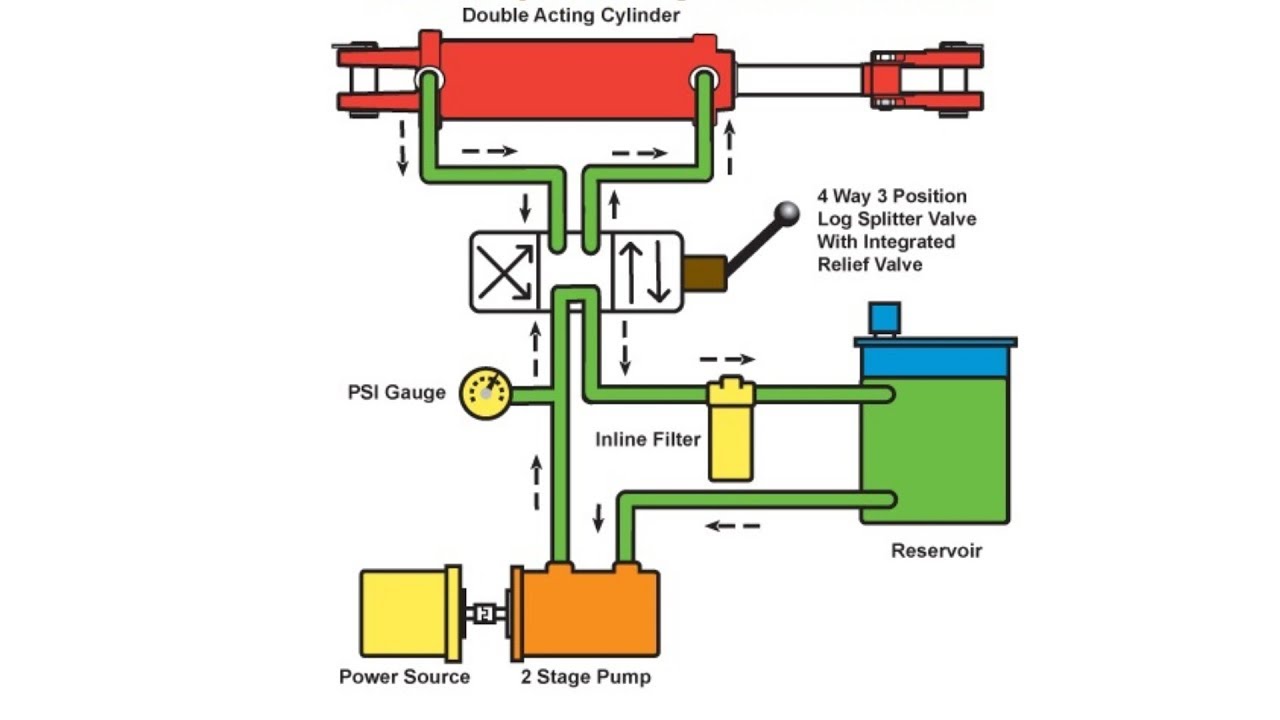
Hydraulic Power
Hydraulic power can be considered in three stages: generation, control, and use. Power generation involves energy conversion as well as fluid conditioning. Components involved in converting electrical energy to mechanical energy and then to hydraulic energy include the pump, electric motor, internal-combustion engine, and pressure indicator. Filters, coolers, heaters, and thermometers are used for fluid conditioning and monitoring.
Hydraulic Oil
Hydraulic systems are used in many different applications, so the term "hydraulic oil" does not refer to a single type of oil. A wide range of hydraulic oils exists, and the appropriate type is selected according to the requirements of each system. In general, hydraulic fluids or oils must be capable of transmitting force, lubricating moving components to reduce wear, and absorbing heat generated within the system.
Properties of Hydraulic Oil
The lubricating oil film must have sufficient strength to remain intact, because film failure can lead to wear of moving components.
The oil should provide suitable lubrication and retain this property at high temperatures and pressures.
For emulsification, the oil should mix with only a limited amount of water so that its viscosity is not adversely affected.
The oil should tolerate high temperatures without releasing harmful vapors and should preferably not be mixed with substances that could generate such vapors.
The oil composition should remain chemically stable under operating conditions. Oxidation should not cause unacceptable changes in viscosity because each hydraulic system requires a suitable viscosity range. For example, if an unstable oil thickens, pressure losses may increase and power available to actuators may decrease, resulting in poor system performance.
The oil should not be corrosive to important hydraulic-system components such as hoses and sealing elements.
The oil should retain its mechanical properties at high temperatures and under oxidation.
The oil should not have harmful effects on workers' health.
The oil should have a low pour point so that performance is not impaired in cold environments. As an example, the source states that oils used in aircraft hydraulic systems may have a pour point of about -60°C and may include mineral oils, glycerin, kerosene, and alcohol in their formulations.
Types of Hydraulic Oil
Hydraulic oils can be divided into several groups according to their composition and application.
Standard mineral-based oils for conventional applications such as motors, cylinders, and electrical converters.
Oil-and-water mixtures and aqueous emulsions, including oil-in-water and water-in-oil emulsions.
Water-free synthetic fluids used as hydraulic fluids, such as diesters, halogenated esters, and chlorinated hydrocarbons.
By application, hydraulic oils may be grouped into oils for low-temperature service, oils resistant to high temperatures and fire, and oils for conventional or standard service.
Chemical additives that release toxic vapors should not be added to hydraulic oils. Permitted additives described in the source include anti-foaming agents, corrosion and wear inhibitors, and additives that improve lubrication and oil-film strength.
Selecting Hydraulic Oil
Selecting the type of hydraulic oil and the required viscosity should be based on the operating requirements of the hydraulic system. The source generally favors lower viscosity because it reduces friction and energy loss and can improve control and precision. Low-viscosity oils may increase leakage, but they can reduce pressure losses and friction. The following points should be considered when selecting an oil:
It should provide strong lubrication to prevent system wear. In systems with significant surface stresses, additives may be used to increase the oil's load-carrying capability.
Leakage should be minimized through clearances between moving and stationary components and through sealing gaps; the oil therefore needs an appropriate viscosity.
Ultimately, the following points should be considered when selecting the proper viscosity for a system:
Viscosity should not be too low, because sealing a system with very low-viscosity oil is difficult.
Viscosity should not be too high, because this increases internal energy losses and pressure drop.
The oil should be compatible with the types of pumps used in the system.
Viscosity should be suitable for equipment operating outdoors so that seasonal temperature changes do not require frequent oil replacement.
How to Store and Maintain Hydraulic Oil
Hydraulic oils can be expensive, and replacing contaminated oil inside a system can be difficult and costly. Careful storage and handling are therefore important.
In storage, drums are preferably laid on their sides and kept under cover, or otherwise protected. Before opening, drums should be thoroughly cleaned to prevent contamination from entering the oil. Clean containers and hoses should be used when transferring oil from a drum to a system; if a pump is used, the source recommends a 25-micron filter. Oil samples should periodically be examined in a laboratory to verify cleanliness. Any oil leakage observed in the system should be repaired promptly.
Central Hydraulic System
Factories commonly use a central pneumatic system to provide compressed air throughout the facility. A central hydraulic system can introduce challenges such as leakage, high operating pressures, and the need for return lines. It may nevertheless be suitable for factories with several interconnected machines.
Designers differ on whether a central or separate system is preferable; the advantages and disadvantages of each are outlined below.
Separate Local Systems
Advantages: 1) circuits are separated; 2) different fluids can be used for different circuits; 3) each circuit can operate at a different pressure; 4) a fault in one circuit does not affect the operation of the others; and 5) the pump motor can be located beside the machine.
Disadvantages: 1) several pumps are required, making servicing more difficult and increasing cost; 2) more installation space is needed; and 3) power and energy consumption are higher.
Central Hydraulic System
Advantages: 1) only one reservoir is required; 2) acquisition and maintenance costs are lower; 3) less space is occupied; 4) one type of oil can be used throughout the central system, reducing oil-related cost; and 5) power and energy consumption are lower.
Disadvantages: 1) a problem in one circuit can affect the whole system; 2) a large number and volume of pipes may be required; 3) pressure-control valves are needed if different pressures are required; and 4) because all system circuits are concentrated in one section, interactions between them may occur.